

Why Is an Automatic Sliding Photocell Door Essential for Modern Building Entrances?
2026-10-13
An Automatic Sliding Photocell Door combines automated door movement with photoelectric sensing technology to create a convenient, efficient, and safer entrance solution. By detecting people or obstacles through a light beam or infrared sensing system, the door can respond automatically according to its control settings. This technology is widely suitable for commercial buildings, shopping malls, hotels, hospitals, office buildings, and other locations with frequent pedestrian traffic.
For businesses seeking to improve entrance accessibility, operational efficiency, and architectural appearance, choosing the right automatic door system is an important investment. Ningbo VEZE Automatic Door Co., Ltd. provides automatic door solutions designed to meet the practical requirements of modern entrance environments.
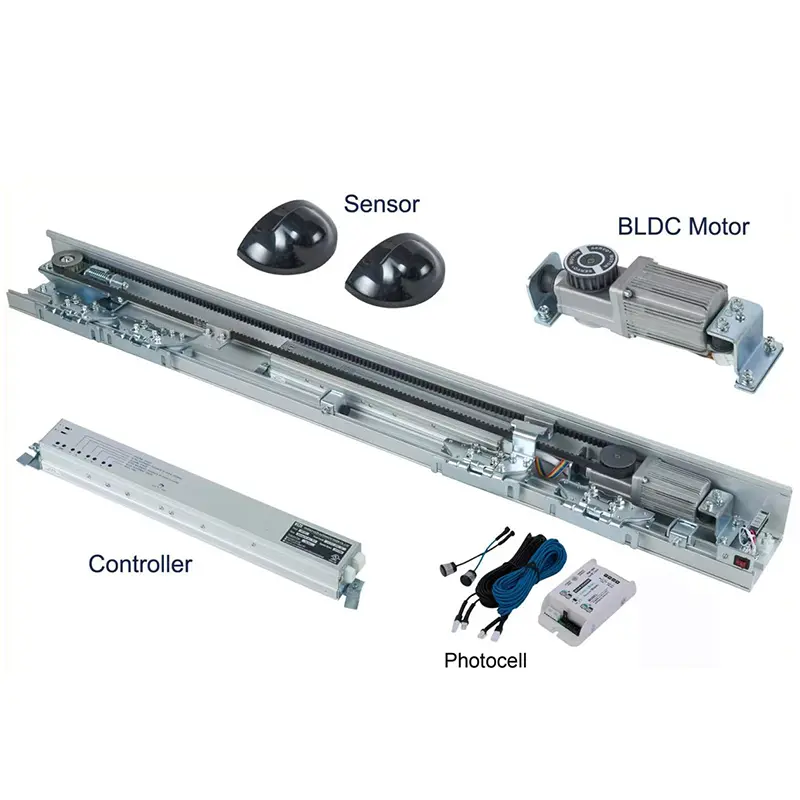
How Does an Automatic Sliding Photocell Door Work?
An Automatic Sliding Photocell Door operates through the coordinated performance of sensors, an electronic controller, a motor, and a sliding mechanism. When a person approaches, the activation sensor detects movement and sends a signal to the controller. The motor then drives the door panels along the track to open the entrance.
Photocell sensors can provide additional protection by detecting interruptions in a light beam across the doorway. Depending on the system configuration, the controller may keep the door open, stop closing, or reverse its movement when an obstruction is detected.
The complete operating process generally includes four stages:
-
Detection: The activation sensor identifies an approaching person.
-
Opening: The controller activates the motor to move the door panels.
-
Passage monitoring: The sensing system monitors the doorway for people or obstacles.
-
Automatic closing: The door closes after the passage is clear and the configured hold-open time has elapsed.
It is important to distinguish between activation sensors and safety photocells. They may perform different functions, and the actual protection level depends on the sensors installed and their integration with the door controller.
What Benefits Does an Automatic Sliding Photocell Door Provide?
1. Improved Entrance Safety
Safety is a primary consideration in buildings with continuous pedestrian traffic. Photocell sensors can detect when someone or something interrupts the monitored beam, allowing the door controller to respond appropriately.
When correctly selected, installed, and maintained, this technology can help reduce the risk of door-related collisions and entrapment. For hospitals, hotels, retail stores, and office buildings, reliable sensing is especially valuable for protecting pedestrians during busy periods.
2. Convenient, Hands-Free Access
An automatic sliding door allows people to enter and exit without manually pushing or pulling a door panel. This is particularly useful for elderly visitors, people with mobility limitations, and customers carrying shopping bags or luggage.
Hands-free operation also benefits healthcare environments, where convenient access and reduced contact with door handles can support daily workflows.
3. Better Traffic Flow
Busy entrances can become bottlenecks when people must manually operate doors. An Automatic Sliding Photocell Door supports a smoother flow of pedestrians by opening automatically when activated.
With suitable opening widths, sensor settings, and operating speeds, businesses can improve entrance efficiency during peak hours while maintaining a more organized access area.
4. A Modern and Professional Appearance
Automatic sliding doors are commonly paired with glass panels and streamlined frames, creating a clean, contemporary appearance. They allow natural light to enter the building and help maintain visual connections between indoor and outdoor spaces.
For commercial properties, a well-designed entrance can strengthen the overall impression of professionalism, accessibility, and attention to detail.
Which Applications Are Best for Automatic Sliding Photocell Doors?
Different buildings have different entrance requirements. The right door configuration depends on pedestrian volume, available installation space, accessibility needs, and environmental conditions.
| Application | Main Advantages |
|---|---|
| Shopping malls and retail stores | Convenient customer access and smoother pedestrian movement |
| Hospitals and healthcare facilities | Hands-free access and support for busy entrances |
| Hotels and commercial buildings | Professional appearance and convenient entry |
| Office buildings | Controlled access and efficient daily operation |
| Airports and transport facilities | Support for high-volume pedestrian traffic |
| Residential and mixed-use buildings | Convenient access and a contemporary entrance design |
For high-traffic locations, buyers should pay particular attention to motor durability, opening and closing cycles, sensor coverage, and maintenance accessibility. For buildings requiring restricted entry, the door system may also need to integrate with access-control equipment.
How Can You Choose the Right Automatic Sliding Photocell Door?
Selecting an appropriate system requires more than comparing the initial purchase price. Buyers should evaluate the complete entrance solution to ensure that the equipment matches the project's operational requirements.
Consider the following factors before making a decision:
-
Sensor performance: Check detection coverage, response characteristics, and suitability for the installation environment.
-
Safety configuration: Confirm that activation and presence-detection functions are appropriate for the intended application.
-
Door dimensions and weight: Ensure that the operator supports the required panel size, weight, and opening width.
-
Operating frequency: Select equipment suitable for the expected daily traffic and operating cycles.
-
Installation conditions: Assess available headroom, wall structure, power supply, and surrounding space.
-
Maintenance and support: Evaluate the availability of replacement components, technical assistance, and routine servicing.
Buyers should also confirm applicable local safety requirements and request relevant technical documentation before installation.
Why Choose Ningbo VEZE Automatic Door Co., Ltd.?
When sourcing automatic door equipment, commercial buyers need to consider product suitability, technical communication, installation requirements, and long-term serviceability.
Ningbo VEZE Automatic Door Co., Ltd. is a company to contact when evaluating automatic door solutions for commercial and architectural projects. By discussing the specific requirements of each entrance, buyers can clarify the appropriate door configuration, sensing functions, operating conditions, and installation arrangements before confirming a specification.
For distributors, contractors, and project purchasers, a clear technical evaluation helps reduce mismatches between equipment and actual site requirements. It also makes it easier to compare quotations based on configuration, safety features, and expected operating conditions rather than price alone.
How Can Regular Maintenance Improve Door Performance?
Even a well-designed automatic door requires routine inspection to maintain reliable operation. Dust accumulation, worn rollers, misaligned tracks, or poorly adjusted sensors can affect performance over time.
A practical maintenance schedule should include:
-
Cleaning sensor surfaces and checking detection areas.
-
Inspecting tracks, rollers, belts, and moving components.
-
Testing opening, closing, and obstacle-response functions.
-
Checking control settings and electrical connections.
-
Arranging professional inspection when abnormal noise, delayed movement, or inconsistent sensor responses occur.
Maintenance frequency should reflect the manufacturer's recommendations, traffic intensity, and site conditions. Safety functions should be tested by qualified personnel, and faulty equipment should not remain in service when it presents a risk.
Conclusion
An Automatic Sliding Photocell Door offers a practical combination of hands-free convenience, intelligent sensing, smooth pedestrian access, and contemporary design. When properly specified and maintained, it can improve the daily operation of commercial entrances while supporting a safer and more accessible environment.
For businesses planning a new entrance or upgrading an existing system, choosing suitable equipment and confirming the required safety configuration are essential steps.
Looking for an automatic door solution for your next project? Contact Ningbo VEZE Automatic Door Co., Ltd. to discuss your application requirements, explore suitable configurations, and identify an entrance solution that fits your building and operational needs.