

Why Are Sliding Remote Doors Becoming the Preferred Choice for Modern Homes and Commercial Spaces?
2025-11-26
A sliding remote door is an automated entry system that opens and closes using a motorized track paired with wireless control technology. It integrates mechanical sliding hardware, intelligent sensors, and remote-control mechanisms to deliver smooth, hands-free operation.
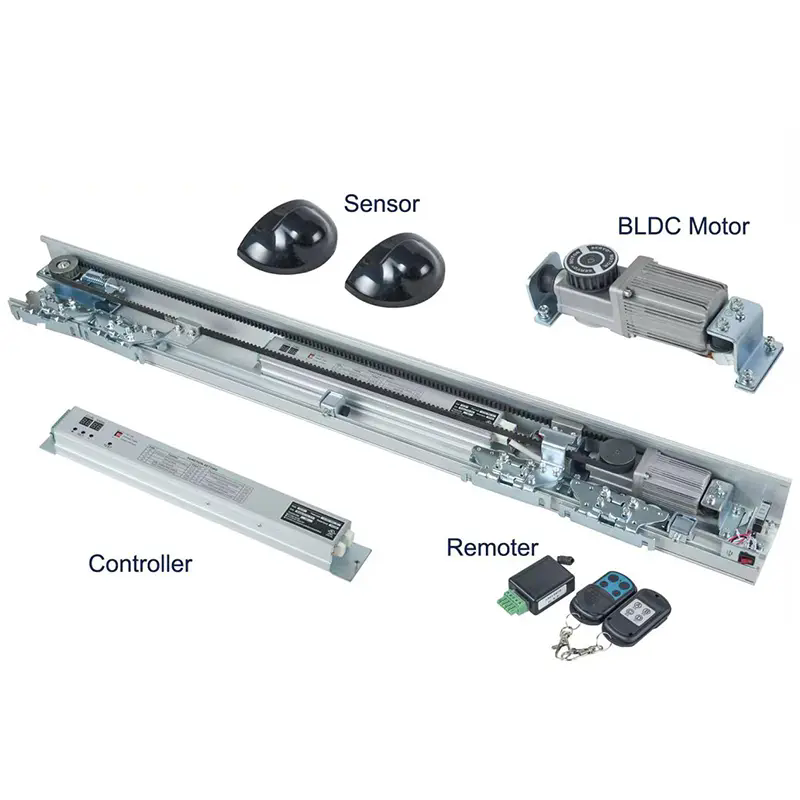
Sliding remote doors are widely used in residential patios, balconies, garages, storefronts, warehouses, hotels, and healthcare buildings. The purpose of this article is to provide a detailed technical understanding of the product specifications, performance indicators, application advantages, and key considerations when selecting the right model.
What Defines a High-Performance Sliding Remote Door?
To evaluate product quality, buyers typically compare structural materials, motor performance, control options, safety features, and durability indicators. Below is a consolidated table of commonly required parameters to demonstrate professional clarity:
Sliding Remote Door Technical Parameters
| Category | Specification Details |
|---|---|
| Door Material Options | Aluminum alloy, stainless steel, tempered glass panels, insulated composites |
| Track Material | Hardened aluminum track / stainless steel rail / anti-corrosion coating |
| Motor Power | 50W–180W (depending on door size and load) |
| Load Capacity | 80–300 kg per panel |
| Opening Speed | 0.3–0.6 m/s adjustable |
| Control Methods | Remote control, wireless keypad, smartphone app, RFID, motion sensor |
| Drive Type | Brushless DC motor / linear drive motor |
| Power Supply | AC 110–240V, optional backup battery |
| Noise Level | < 50 dB during operation |
| Security Systems | Anti-pinch sensors, automatic stop, safety photo-beam system |
| Lifespan Cycles | 1,000,000+ open/close cycles |
These specifications help users understand how durability, power efficiency, and intelligent control contribute to operational stability.
Why Do Sliding Remote Doors Matter?
Why are sliding remote doors replacing traditional door mechanisms?
Sliding remote doors offer enhanced convenience, safety, and functional performance. Their motorized design eliminates manual force, which is particularly beneficial for high-traffic environments and accessibility-driven architecture.
Key Functional Advantages
-
Hands-free operation: Remote and sensor-activated systems reduce physical contact, supporting cleaner and safer access.
-
Efficient space utilization: Sliding mechanisms do not require door swing clearance, allowing optimal use of interior or exterior spaces.
-
Energy efficiency: When paired with insulated glass or composite materials, they help maintain indoor climate control.
-
Improved security: Intelligent locking, auto-close features, and sensor integration strengthen safety.
-
Smooth and quiet motion: High-grade motors and rail systems ensure stable low-noise functionality.
Why businesses prefer sliding remote doors?
Commercial spaces rely on speed, accessibility, and durability. High-cycle motors and advanced sensors support continuous flow without manual intervention, making them indispensable for retail, hospitality, healthcare, and industrial facilities.
Why homeowners choose sliding remote doors?
Residential applications focus on comfort, aesthetics, and modernization. Remote control systems enhance convenience, while sleek frameless or aluminum designs upgrade the home’s visual appeal.
How Do Sliding Remote Doors Work?
How does the system achieve automatic sliding motion?
The operating principle revolves around:
-
Motor Drive: A brushless DC motor generates torque to move the door along the track.
-
Controller System: A microprocessor receives signals from the remote or sensors and adjusts speed, resistance, and braking.
-
Sliding Track Assembly: Precision-crafted rails guide motion and ensure balance.
-
Sensors: Infrared or microwave sensors detect movement or obstacles, triggering open/close actions.
-
Wireless Remote Module: Operates via RF signals or encrypted Bluetooth/Wi-Fi connections.
How is installation typically conducted?
Professional installation includes assessing door weight, measuring mounting surfaces, wiring power supply, calibrating sensors, adjusting tension, and programming control settings. High-accuracy calibration ensures quiet, stable motion and long-term reliability.
How to maintain a sliding remote door?
-
Clean tracks regularly
-
Check lubrication of rollers
-
Verify remote battery status
-
Inspect sensor alignment
-
Test emergency manual override
Routine maintenance maximizes safety and extends product lifespan.
Future Trends: What Innovations Will Shape the Next Generation of Sliding Remote Doors?
Trend 1: Expansion of Smart Connectivity
Doors are integrating with smart home ecosystems, allowing app control, voice-activated access, and remote monitoring through IoT platforms.
Trend 2: AI-Driven Sensing and Predictive Operation
Advanced algorithms will detect traffic patterns to optimize opening speed, auto-close timing, and energy conservation.
Trend 3: High-Strength Lightweight Materials
Composite laminates and insulated aluminum structures will enhance durability while reducing load stress on motors.
Trend 4: Energy-Efficient Motor Technology
Low-voltage and ultra-quiet motors will dominate future markets due to sustainability and reduced power consumption.
Trend 5: Expanded Architectural Customization
Manufacturers will offer more personalized door sizes, finishes, and glass types to support diverse design requirements.
Two Common Questions About Sliding Remote Doors (FAQ)
Q1: How safe is a sliding remote door during unexpected obstruction?
A: High-quality sliding remote doors integrate multi-layer safety systems including anti-pinch technology, infrared sensors, and intelligent force detection. When the door detects an obstacle, the system immediately reverses motion or halts operation to prevent injury or damage. Some models also include emergency manual release for power outages, ensuring consistent security.
Q2: What factors determine the lifespan of a sliding remote door?
A: Lifespan depends on material durability, motor cycle rating, environmental exposure, and maintenance frequency. Features such as brushless motors, stainless steel tracks, and high-grade rollers significantly extend service life. Proper care—such as cleaning the rail system and ensuring correct sensor alignment—helps the door reach or exceed its million-cycle performance benchmark.
Why Sliding Remote Doors Offer a Long-Term Advantage — and How VEZE Supports Your Project
Sliding remote doors provide a combination of convenience, safety, durability, and aesthetic flexibility that meets the demands of both residential and commercial environments. With strong structural materials, advanced motor systems, intelligent controls, and high safety standards, these doors represent a reliable long-term upgrade to any building's access system. As future trends continue to elevate automation, efficiency, and smart connectivity, sliding remote doors will remain an essential architectural component for enhanced user experience.
VEZE focuses on delivering high-precision sliding remote door solutions engineered for performance, longevity, and architectural versatility. For project inquiries, customized specifications, or technical consultation, contact us to receive professional guidance and tailored product support.