

Which steel fire doors truly protect people, schedules, and budgets?
2025-12-09
I spend my days walking job sites, reading submittals, and troubleshooting door schedules, so I learned quickly that theory is never enough. When I coordinate with procurement and safety teams, I look for partners who solve real constraints rather than just quote part numbers. That is how I was introduced to FANSI on a hospital retrofit, and why I still specify steel fire doors when environments are punishing, timelines are tight, and documentation must pass audits without drama. In this guide I share how I evaluate steel fire doors, what I include in RFQs, and where they save money across the life cycle—so your next handover is clean and your building remains safe.
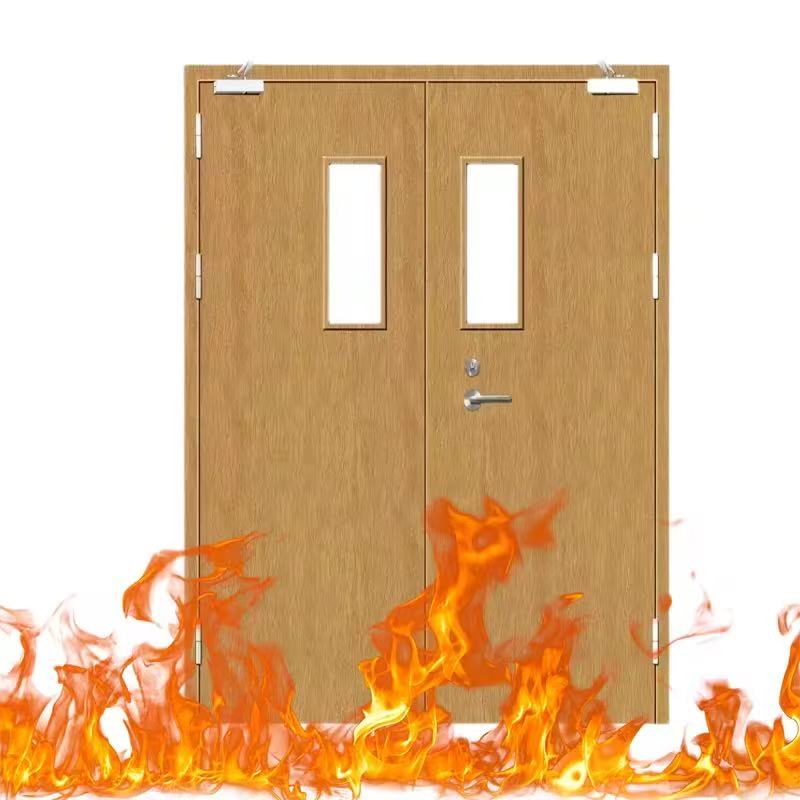
What problems do buyers face before choosing steel fire doors?
- Certificates that do not match the exact door set, glazing, and hardware combination, creating approval risk at final inspection.
- Finishes that chalk or peel in coastal or industrial air, forcing early repainting and downtime.
- Frames delivered out of tolerance, leading to gaps that compromise ratings and trigger costly rework.
- Hardware misalignment because the door, frame, and closer were never coordinated as a tested assembly.
- Long lead times that collide with MEP sequencing, delaying fire-stopping and inspection milestones.
How do I verify the performance of steel fire doors without guesswork?
- I request complete test evidence for the exact configuration, not just a generic family. That includes leaf thickness, core type, vision panel size, intumescent profile, and latch requirements.
- I check that the positive or neutral pressure protocols used in testing align with local authority requirements, and that the door set has been tested with the proposed hardware.
- I confirm field labeling and traceability so inspectors can match labels to submittals at a glance.
- I review smoke control options and ask for air leakage data where smoke-rated openings are required.
Why do steel fire doors outperform timber when conditions are harsh?
- They resist humidity swings in kitchens, plant rooms, and basements, staying stable and square under load.
- They tolerate frequent cleaning in healthcare and food facilities where hygiene matters.
- They shrug off impacts from carts and trolleys when filled with mineral cores and built with reinforced edges.
- They pair well with antimicrobial powder coats and hard-wearing topcoats for high-traffic zones.
Which specifications should I put in the RFQ for steel fire doors to avoid ambiguity?
- Required rating minutes for the door set and the frame, plus any smoke control need.
- Leaf construction including core material, leaf thickness, edge reinforcement, and vision panel dimensions.
- Frame profile, wall depth, and anchor type with tolerances for plumb and twist.
- Intumescent and smoke seals with expansion characteristics and locations.
- Certified hardware list including closer type, hinge grade, latch throw, panic device, and compatibility.
- Finish system with salt-spray or abrasion expectations and color standard.
- Field labeling, documentation package, and on-site adjustment instructions.
What installation mistakes ruin certified steel fire doors even when the product is right?
- Oversized clearances at the head or strike, creating leakage paths that fail inspection.
- Field cutting of vision panels or undercutting the leaf without approved details.
- Substituting non-listed hardware that was not part of the tested assembly.
- Skipping shims at anchor points, which twists the frame and binds the latch.
- Painting over labels or seals, making verification impossible at final checks.
How does a partner like FANSI simplify selection and delivery without complicating my schedule?
- By offering coordinated door sets where the leaf, frame, and hardware are designed and documented together.
- By providing shop drawings that match openings on the schedule, reducing RFIs and site adjustments.
- By using durable finishes tailored to tough environments so touch-up work stays minimal.
- By packaging installation guides that crews actually follow, with clear tolerances and photos.
When I evaluate suppliers, I reward those who help me avoid downstream friction. That has been my experience whenever I spec steel fire doors through teams who prioritize complete, inspector-ready documentation and reliable lead times.
Where do steel fire doors deliver lifetime savings that spec sheets rarely show?
- Fewer call-backs because rigid frames and reinforced edges keep hardware aligned under heavy use.
- Lower repaint frequency when powder-coated surfaces resist scratching and chemicals.
- Better temperature and smoke control that protects adjacent systems and reduces clean-up after incidents.
- Higher uptime in facilities thanks to robust closers and latches that stay in alignment.
What should my comparison checklist include before I award the package?
| Item | Steel Door Set | Typical Alternatives | What I Verify |
|---|---|---|---|
| Fire Rating Range | Commonly 45–120 minutes depending on build | Wood or aluminum options may be limited in higher ratings | Rating minutes match the opening schedule and wall rating |
| Core Options | Mineral or composite cores with reinforced edges | Honeycomb or timber cores with lower impact tolerance | Core type listed in the test report for the exact leaf |
| Vision Panels | Certified glazing sizes with listed beads and seals | Limited sizes or unlisted glazing kits | Glazing size and kit match the report and drawings |
| Frame Strength | Pressed or welded frames with anchor choices | Lighter frames prone to twist and gap changes | Anchors and wall depth confirmed before fabrication |
| Hardware Integration | Door, frame, and hardware tested as a set | Mix-and-match risking listing conflicts | All hardware appears on the approved assembly |
| Finish Durability | Powder coat with high abrasion and chemical resistance | Paint that chips or fades under cleaning cycles | Finish spec aligned to environment and cleaning plan |
| Documentation | Traceable labels, drawings, and maintenance guides | Incomplete paperwork and missing field labels | Submittal set mirrors the installed configuration |
How do I keep steel fire doors compliant after handover?
- I set inspection intervals and record gaps, latch function, and closer speed.
- I train staff not to wedge doors open and to report any drag or misalignment.
- I maintain a replacement kit with listed seals and approved hardware spares.
- I schedule fast-response service for high-traffic openings to prevent unsafe workarounds.
What is my bottom line when I specify steel fire doors for the next project?
My rule is simple. If an opening faces high traffic, moisture, or frequent cleaning—or if inspection scrutiny will be intense—I reach for steel fire doors from a team that understands whole-assembly performance and field realities. That keeps people safe and schedules predictable.
Shall we talk about your project today?
If you want drawings reviewed, an RFQ refined, or a door schedule sanity check, I am ready to help you put the right details in place with solutions like those I trust from FANSI. Share your opening counts, wall types, and deadlines, and let’s make approvals straightforward. If you are ready to move, contact us and tell me where you need the earliest submittals and which areas are critical for turnover.