

Which Sectional door Solves Industrial Loading Bay Problems Best?
2026-05-13
A good industrial entrance should not simply open and close. It should help a facility reduce heat loss, protect goods, improve workflow, support daily safety, and keep loading operations stable even under frequent use. This article explains how to choose a sectional door for warehouses, factories, logistics centers, cold-chain areas, workshops, and commercial buildings. It looks at insulation, sealing, panel strength, operating systems, maintenance needs, safety devices, and the practical details buyers often overlook before installation. Everbesten Industrial Limited Co., Ltd. is also mentioned as a supplier reference for industrial door and loading bay solutions.
- Why does a sectional door matter more than many buyers expect?
- What problems does the right sectional door help solve?
- How does a sectional door work in daily industrial use?
- Which details should buyers compare before ordering?
- Where is a sectional door most commonly used?
- How does a sectional door compare with other industrial doors?
- What maintenance habits extend service life?
- FAQ
- Conclusion
- Industrial door selection should begin with real site problems, not just door size.
- Panel structure, sealing, balance system, track design, and safety devices affect long-term performance.
- A sectional door is often suitable where space saving, insulation, stability, and neat appearance are required together.
- Buyers should confirm opening frequency, building structure, climate conditions, door dimensions, control method, and maintenance access before purchasing.
- The best choice is usually the one that fits the building, traffic flow, operating budget, and future service needs.
Why does a sectional door matter more than many buyers expect?
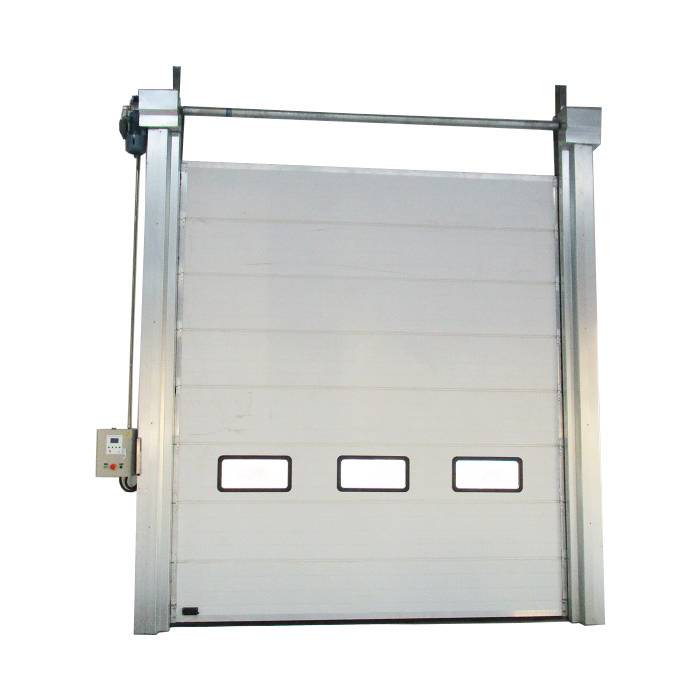
In many factories and warehouses, the door is treated as a simple building accessory. Buyers measure the opening, ask for a quotation, compare the price, and move on. That approach may look efficient at first, but it often leads to problems after installation. A poorly matched industrial door can slow down loading work, allow dust and wind into the building, increase energy loss, expose workers to safety risks, and create repeated maintenance costs.
A sectional door is different from a basic rolling shutter or a simple swing door because it is designed around controlled movement. The door panels rise vertically and move along tracks toward the ceiling, helping save space around the entrance. This structure is especially useful for loading bays, production workshops, logistics centers, and buildings where vehicles, forklifts, pallets, or equipment need to move near the opening.
For buyers, the real value is not only the door itself. The value comes from a more stable entrance system. When the door seals well, the indoor environment becomes easier to manage. When the panels are strong enough, the door can handle busy industrial use. When the spring balance and lifting system are properly designed, operation becomes smoother and safer. That is why companies such as Everbesten Industrial Limited Co., Ltd. focus on industrial doors and loading bay equipment as part of a complete facility solution rather than treating the door as a standalone panel.
What problems does the right sectional door help solve?
Most customers begin looking for a sectional door because they are already dealing with one or more painful problems. The entrance may be leaking air. The old door may be noisy. Workers may complain that the loading area is too hot in summer or too cold in winter. A door may be hard to lift manually, or the existing system may stop frequently during busy loading periods. These issues look small separately, but together they can damage productivity.
A well-designed sectional door can help solve several practical problems at the same time:
- Space pressure near the opening: The upward-opening structure keeps the area in front of the entrance clearer than many traditional door types.
- Temperature loss: Insulated panels and proper sealing can reduce unwanted air exchange between indoor and outdoor areas.
- Dust, rain, and wind: Side seals, top seals, and bottom seals help protect goods and equipment from outside conditions.
- Frequent operation: A balanced lifting system can make the door easier to open and close during daily use.
- Appearance: Clean panel lines give industrial buildings a more professional and modern look.
- Safety concerns: Optional devices can reduce risks linked to falling doors, cable issues, uncontrolled movement, or accidental obstruction.
The important point is that not every sectional door performs equally. Two doors may look similar in photos, but the difference becomes obvious after months of operation. Panel thickness, steel quality, track accuracy, hinge strength, spring design, sealing material, and installation quality all influence the final result.
Do not only ask, “How much is the door?” A better question is, “What problem will this door reduce for my building over the next five to ten years?” That one question quickly separates a low-cost purchase from a reliable facility investment.
How does a sectional door work in daily industrial use?
A sectional door is made from multiple horizontal panels connected by hinges. When the door opens, the panels move upward along side tracks and then follow the track curve toward the ceiling or along a high-lift layout, depending on the building structure. This movement allows the door to stay close to the wall and ceiling instead of swinging outward.
The operating system may be manual, chain-operated, or motorized. In industrial environments, motorized operation is often preferred because it saves labor and supports smoother workflow. For large openings, frequent operation, or heavy panels, a motorized system can also help reduce strain on workers.
The balance system is another key part. A sectional door is usually supported by springs or other balancing components that offset the door weight. When properly configured, the door should move smoothly rather than feel heavy or unstable. This matters because an unbalanced door can wear parts faster and create safety risks.
Sealing is equally important. A door may have strong panels but still perform poorly if the side, top, and bottom sealing areas are weak. In warehouses that store packaged goods, food-related products, electronics, chemicals, textiles, or temperature-sensitive materials, poor sealing can lead to dust, pests, moisture, or unstable indoor conditions.
| Component | Practical Function | Why Buyers Should Care |
|---|---|---|
| Door panels | Form the main body of the door and provide strength, insulation, and appearance. | Panel quality affects durability, energy performance, and resistance to daily impact. |
| Tracks | Guide the panels upward and backward during opening. | Poor track alignment may cause shaking, noise, or premature wear. |
| Hinges and rollers | Connect panels and support smooth movement. | Weak hardware can become a hidden maintenance cost in high-use facilities. |
| Spring balance system | Helps offset door weight and supports easier operation. | A properly balanced door is safer and more reliable. |
| Sealing strips | Reduce air, water, dust, and wind entry. | Good sealing helps protect goods and improve indoor comfort. |
| Motor and controls | Support automatic opening and closing. | Useful for busy loading bays and facilities with frequent vehicle movement. |
Which details should buyers compare before ordering?
Choosing a sectional door should start with the site, not the catalog. A door that works perfectly in one warehouse may be unsuitable for another building with different traffic flow, ceiling height, wind exposure, or operating frequency. Before ordering, buyers should collect clear site information and review it with the supplier.
The first detail is the opening size. Width and height must be accurate, but buyers should also check side room, headroom, backroom, ceiling obstacles, beams, pipes, lights, and nearby equipment. A sectional door needs enough space for its track layout. If the building has limited headroom, special track arrangements may be required.
The second detail is usage frequency. A door opened only a few times per day has different requirements from one used continuously in a busy logistics center. Higher frequency usually calls for stronger hardware, better rollers, reliable motors, and easier maintenance access.
The third detail is environmental exposure. Doors facing strong wind, rain, coastal air, high humidity, dust, or temperature differences need more careful material and sealing selection. For cold storage transition zones, insulated panels become especially important. For general workshops, balanced cost and durability may be the main priority.
Buyers should also think about control methods. A simple push-button may be enough for some buildings. Others may need remote control, radar sensor, loop detector, safety light curtain, warning lamp, or integration with loading bay equipment. In larger facilities, door control is not just about convenience. It affects traffic flow, worker safety, and loading speed.
- Confirm exact opening width and height.
- Check available headroom, side room, and backroom.
- Identify how many times the door will open each day.
- Decide whether insulation is necessary for the building.
- Review wind, rain, dust, humidity, and temperature conditions.
- Choose manual, chain, or motorized operation based on workflow.
- Ask about safety devices and emergency release options.
- Confirm spare parts availability and after-sales support.
Where is a sectional door most commonly used?
A sectional door is suitable for many industrial and commercial spaces because it combines space saving, practical sealing, and stable operation. It is often selected for loading bays where trucks reverse close to the building. Since the door rises vertically, it does not interfere with vehicle movement in front of the opening.
Warehouses also benefit from sectional doors because indoor cleanliness and temperature stability are often important. Even in non-refrigerated storage areas, better sealing can help protect cartons, pallets, machinery, and finished products from dust or rain splash.
Manufacturing workshops may use sectional doors between indoor and outdoor production zones. In these environments, the door must be strong enough for industrial use but also easy to operate when materials are moving in and out. For buildings with a modern exterior design, the neat panel surface also helps improve the appearance of the facility.
| Application Area | Main Customer Concern | Sectional Door Advantage |
|---|---|---|
| Warehouse entrance | Protecting stored goods from dust, wind, and rain | Good sealing and stable panel structure |
| Loading bay | Keeping truck loading work efficient | Vertical opening saves space near vehicles |
| Factory workshop | Managing frequent material movement | Smooth operation with manual or motorized control |
| Cold-chain transition area | Reducing temperature exchange | Insulated panels and sealing help limit energy loss |
| Commercial industrial building | Balancing function and appearance | Clean panel design improves exterior presentation |
How does a sectional door compare with other industrial doors?
Buyers often compare sectional doors with rolling shutters, high speed doors, and sliding doors. Each type has its place. The best option depends on the opening size, working environment, budget, insulation need, and traffic pattern.
A rolling shutter is often chosen for basic security and compact installation. However, it may not offer the same insulation and sealing performance as a sectional door. A high speed door is excellent for fast traffic flow and environmental separation, but it may not be the first choice when the buyer needs a strong exterior door with better panel rigidity. A sliding door can work for large openings, but it requires side space and may not suit busy loading bays.
The sectional door sits in a practical middle position. It provides a stronger building entrance than many lightweight doors, while offering better space efficiency than swing or sliding structures. For many warehouses and factories, this balance is exactly what makes it attractive.
| Door Type | Strength | Possible Limitation | Best Fit |
|---|---|---|---|
| Sectional door | Good sealing, insulation options, clean appearance, space-saving opening | Requires proper track space and accurate installation | Warehouses, loading bays, workshops, industrial buildings |
| Rolling shutter | Compact and familiar structure | May be weaker in insulation and sealing | Basic entrances and security-focused openings |
| High speed door | Fast opening and closing | Usually selected for speed rather than heavy exterior performance | Busy indoor passages and controlled environments |
| Sliding door | Simple movement for wide openings | Needs side clearance and may slow traffic | Large storage areas with enough wall space |
What maintenance habits extend service life?
Even a well-made sectional door needs regular inspection. Industrial environments are demanding. Dust, vibration, forklift traffic, weather changes, and frequent operation can gradually affect the door system. Simple maintenance habits can prevent small issues from becoming expensive shutdowns.
Workers should pay attention to unusual noise, shaking, uneven movement, slow response, damaged seals, loose hardware, or visible panel deformation. The door should not be forced if it becomes stuck. Forcing operation may damage the track, motor, spring system, or panels.
A basic inspection schedule may include checking rollers, hinges, cables, springs, tracks, seals, control buttons, safety devices, and motor performance. Cleaning the track area also helps. In facilities with heavy dust or outdoor exposure, inspection should be more frequent.
- Keep tracks clean and free from obstacles.
- Check whether the door opens and closes evenly.
- Inspect seals for cracks, gaps, or hardening.
- Listen for unusual grinding or scraping sounds.
- Test safety devices according to the supplier’s instructions.
- Do not allow untrained workers to adjust springs or major components.
- Arrange professional service when the door becomes heavy, unstable, or noisy.
Maintenance is not only about repair. It protects daily workflow. In a busy warehouse, one failed door can delay loading schedules, block vehicles, expose goods to weather, and create unnecessary pressure for the operations team.
FAQ
What is a sectional door used for?
A sectional door is commonly used for industrial and commercial entrances, especially warehouses, factories, workshops, logistics centers, and loading bays. It is useful where buyers need space-saving movement, reliable sealing, and stable daily operation.
Is a sectional door suitable for a loading bay?
Yes. A sectional door is often a strong choice for loading bays because it opens upward and does not swing into the truck area. It can work together with dock levelers, dock seals, and other loading bay equipment to improve loading efficiency.
Does a sectional door help reduce energy loss?
It can help when the door uses insulated panels and proper sealing. While the final result depends on the building, installation, and usage habits, a well-selected door can reduce unwanted air exchange and support a more stable indoor environment.
Can a sectional door be motorized?
Yes. Many industrial sectional doors can be equipped with motors and control systems. Motorized operation is useful for large doors, frequent use, and loading areas where workers need faster and easier access.
How should I choose the right sectional door size?
Measure the opening width and height carefully, then check the side room, headroom, and backroom. The building structure around the opening matters because the door panels and tracks need enough space to move correctly.
What makes one sectional door better than another?
Key differences include panel material, insulation performance, sealing quality, track design, roller strength, spring balance, motor reliability, safety devices, and installation accuracy. The best door is not always the cheapest one; it is the one that performs reliably in the buyer’s actual working environment.
Which sectional door choice gives buyers better long-term value?
The best sectional door is not chosen by appearance alone. It is chosen by matching the door to the building, traffic flow, climate, opening frequency, safety requirements, and maintenance expectations. For a light-use storage room, a simple configuration may be enough. For a busy logistics center, stronger hardware, reliable motorization, better sealing, and safety accessories may be worth the investment.
Buyers should look beyond the initial price and consider the full cost of ownership. A door that seals better may reduce energy waste. A door that runs smoothly may reduce worker frustration. A door that is easier to maintain may prevent downtime. A door that fits the building correctly may avoid repeated adjustment after installation.
For industrial projects, it is wise to work with a supplier that understands both door structure and loading bay operations. Everbesten Industrial Limited Co., Ltd. provides industrial door and loading bay equipment solutions for facilities that need practical, durable, and site-matched entrance systems.
Need a sectional door for your warehouse or loading bay?
If you are planning a new industrial entrance, replacing an old warehouse door, or upgrading a loading bay system, share your opening size, site photos, usage frequency, and project requirements with our team. We will help you review the suitable sectional door configuration and provide a practical solution for your facility. For product details, quotation support, or project discussion, please contact us today.