

Article Summary
A manual sliding cold storage door is designed to provide access to refrigerated or frozen rooms while helping limit heat transfer between different temperature zones. Its performance depends on several connected elements, including the insulated door panel, perimeter seals, sliding hardware, frame, floor clearance, and installation quality. Buyers should evaluate the intended temperature range, opening dimensions, traffic frequency, moisture conditions, cleaning requirements, and available operating space before making a decision. Routine inspections of seals, tracks, rollers, and hardware help preserve smooth operation and reduce unexpected downtime. By matching the door configuration to the facility's actual workflow, businesses can improve temperature control, product protection, and long-term operating reliability.
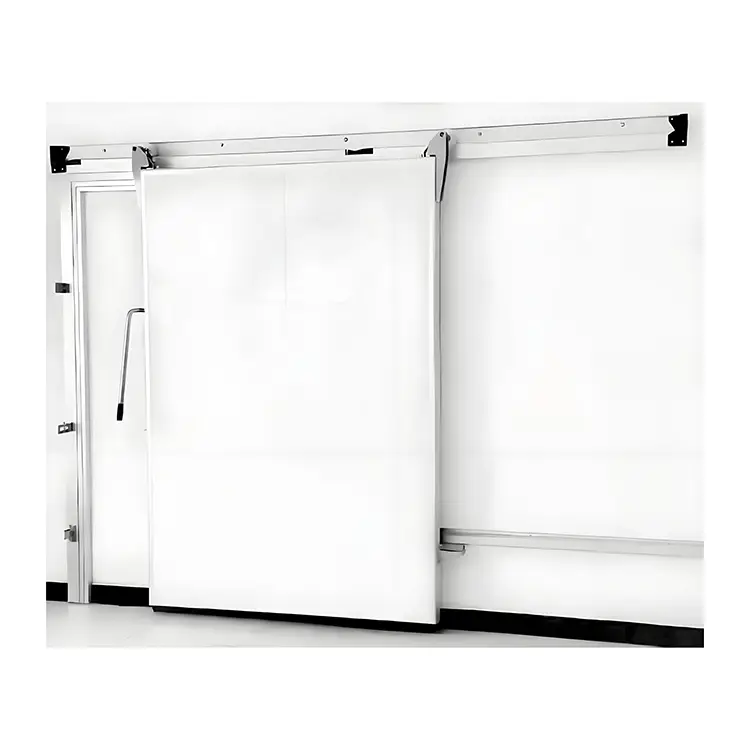
Understanding Manual Sliding Cold Storage Doors
A manual sliding cold storage door is an insulated access system that opens horizontally along a track. Instead of swinging into a room or corridor, the door panel moves to one side, allowing people, carts, pallet trucks, or other suitable handling equipment to pass through the opening.
These doors are commonly used in cold rooms, chillers, freezers, food storage areas, and temperature-controlled production facilities. Their main purpose is to provide convenient access while limiting the movement of warm, humid air into colder spaces. This matters because frequent air exchange can increase refrigeration demand, introduce moisture, and contribute to frost or condensation under certain conditions.
Unlike an ordinary interior door, a cold storage door must be designed around temperature differences, insulation requirements, sealing performance, and the physical demands of an industrial environment. A door that looks sturdy but has poorly fitted seals or unsuitable hardware may allow unnecessary heat transfer and become difficult to operate over time.
Manual operation can be particularly suitable when access frequency is moderate, a straightforward operating method is preferred, or the installation does not require automated opening controls. However, the correct choice depends on traffic patterns and the facility's safety requirements rather than on the operating method alone.
How the Sliding System Works
A typical manual sliding cold storage door uses a combination of an insulated panel, rollers or hangers, a track, a surrounding frame, and sealing components. The user moves the panel horizontally by its handle, and the hardware guides the door between its open and closed positions.
The Main Operating Components
- Insulated panel: Forms the main barrier between the cold room and the surrounding environment.
- Track and roller assembly: Supports and guides the panel during movement.
- Door frame: Provides a stable perimeter for installation and sealing.
- Perimeter seals: Help reduce unwanted air exchange around the closed panel.
- Handle and operating hardware: Allow staff to open and close the door manually.
- Guides and stops: Help control panel movement and maintain the intended travel range.
When the door closes, the panel and sealing system should meet the frame as intended. If the panel is misaligned, a seal is worn, or the closing position is incorrect, small gaps may develop. These gaps can reduce thermal performance even when the insulation material inside the panel remains in good condition.
Why Smooth Movement Matters
Staff should be able to move the door without excessive force, scraping, or sudden resistance. Difficult operation can slow product handling and encourage employees to leave the door partly open. It may also indicate an issue with the track, rollers, alignment, seals, or surrounding structure. Identifying the cause early is usually more effective than repeatedly forcing the panel into position.
Key Benefits for Cold Storage Facilities
The value of a manual sliding cold storage door comes from how well it fits the facility's daily operations. A suitable design can support temperature management, make access more convenient, and simplify routine servicing.
1. Space-Efficient Access
The panel slides parallel to the wall instead of swinging across the floor. This can help preserve clearance in narrow corridors and areas where carts or pallets need room to maneuver.
2. Insulated Separation
An appropriately specified panel and properly fitted seals help reduce heat transfer and unwanted air exchange when the door is closed.
3. Straightforward Operation
Manual opening can provide a simple, direct operating method without relying on a powered drive system. Staff training and operating procedures are still important.
4. Maintainable Hardware
Tracks, rollers, handles, and seals can be inspected as part of a planned maintenance routine, helping teams identify wear before it becomes a major disruption.
Supporting Energy Management
Refrigeration equipment must remove heat that enters a cold room through the building envelope, products, equipment, and air exchange. A well-fitted cold storage door helps control one part of that load. The actual energy savings depend on factors such as room temperature, opening frequency, door size, seal condition, and operating practices.
Keeping the door closed when access is not required, reducing unnecessary opening time, and repairing damaged seals are practical steps that complement good door design. No door alone can compensate for poor temperature management or an unsuitable refrigeration system, but a properly selected assembly can contribute to a more controlled environment.
Protecting Stored Products
Temperature-sensitive goods may be affected by repeated temperature fluctuations or moisture exposure. A reliable door helps support consistent room conditions, particularly when staff follow correct loading procedures and avoid leaving the opening exposed longer than necessary.
Important Construction and Performance Features
Two doors may have a similar appearance but differ significantly in insulation, sealing, durability, and operating feel. Before comparing quotations, review the following technical elements.
Insulation Material and Panel Thickness
Insulated panels are commonly made with a core material selected for its thermal performance and structural properties. The appropriate core, thickness, and panel construction depend on the intended room temperature, size of the opening, expected usage, and the manufacturer's specifications.
Do not assume that a thicker panel automatically guarantees better overall performance. The panel's thermal properties, joints, frame details, and perimeter seals should be considered together. Ask the supplier for documented thermal specifications and confirmation that the proposed configuration is suitable for the intended temperature range.
Perimeter Sealing
Seals help reduce air leakage around the edges of the closed door. Their suitability depends on the application, including temperature, humidity, cleaning practices, and the way the panel meets the frame. Seals should remain flexible enough for their intended service conditions and should not be excessively compressed or damaged during operation.
Track, Rollers, and Load Capacity
The sliding mechanism must support the weight of the complete panel and remain aligned under regular use. Hardware should be selected according to the door's dimensions, weight, expected opening frequency, and installation environment. Corrosion resistance and ease of inspection may also matter in wet or frequently cleaned areas.
Surface Finish and Hygiene
Cold storage environments may require regular cleaning to remove dust, food residue, or other contaminants. Smooth, durable surfaces and accessible hardware can simplify cleaning. In food-related facilities, the door materials and cleaning method should be compatible with the site's hygiene procedures and applicable requirements.
Condensation and Frost Management
Condensation can occur when warm, humid air contacts surfaces below its dew point. Frost may develop in freezing environments when moisture reaches sufficiently cold surfaces. Door design, sealing, humidity control, room pressure conditions, and opening practices can all influence these issues.
For freezer applications or installations with significant temperature differences, ask whether the selected configuration needs specialized seals, a heated frame, or other measures. These features should be specified for the actual operating conditions rather than added without evaluating the source of the moisture problem.
How to Choose the Right Manual Sliding Cold Storage Door
A reliable purchase begins with accurate information about the opening and the operating environment. Choosing by price or appearance alone can lead to poor fit, difficult operation, premature wear, or inadequate temperature separation.
1. Define the Temperature Range
Clarify whether the door will serve a chilled room, a freezer, or an area separating different temperature zones. Record the normal operating temperature and any relevant conditions such as high humidity, frequent washdown, or large temperature differences. Ask the supplier to confirm that the complete door assembly is suitable for these conditions.
2. Measure the Opening Carefully
Measure the opening width and height at multiple points. Check whether the surrounding walls are level and plumb, and note any pipes, cable trays, columns, or equipment that could interfere with the panel's travel. The required clear opening should reflect the dimensions of the products and handling equipment that need to pass through.
3. Review Available Sliding Space
A sliding door needs sufficient space beside the opening for the panel to move. Confirm the required travel distance and the clearance needed for handles, stops, track supports, and nearby equipment. Where the wall cannot accommodate the full panel width, discuss an alternative configuration with the supplier.
4. Estimate Traffic Frequency
Consider how often the door will open during a typical shift, whether access is primarily pedestrian or equipment-based, and whether several people may use it at the same time. Manual operation can be practical for some traffic patterns, but high-volume operations may benefit from evaluating other configurations or operational controls.
5. Confirm Safety Requirements
Workers must be able to operate the door safely from the intended side or sides. Depending on the application, requirements may include suitable handles, secure stops, emergency access provisions, and visibility or communication procedures. Freezer rooms and other enclosed cold spaces require particular attention to applicable emergency-opening and personnel-safety requirements.
6. Compare Total Ownership Costs
The purchase price is only one part of the decision. Consider installation, routine inspection, replacement seals, hardware availability, cleaning needs, and the potential cost of interrupted operations. A door that matches the application well may offer better long-term value than a lower-priced option that requires frequent adjustment or early replacement.
Manual Sliding Doors Compared with Other Options
Different door styles solve different operational problems. The following table offers a general comparison; actual performance depends on the specific product design and site conditions.
| Consideration | Manual Sliding Door | Hinged Cold Room Door | Powered Sliding Door |
|---|---|---|---|
| Opening movement | Slides along a track | Swings around hinges | Slides using a powered drive |
| Space requirement | Needs side clearance for panel travel | Needs swing clearance | Needs side clearance and drive-system space |
| Operating method | Direct manual operation | Direct manual operation | Automated, usually with a control system |
| Maintenance focus | Track, rollers, alignment, and seals | Hinges, closing hardware, and seals | Drive, controls, sensors, track, and seals |
| Potentially suitable use | Areas where manual sliding access fits the workflow | Openings with adequate swing clearance | Operations requiring frequent or controlled automated access |
| Key decision | Manual effort and sliding clearance | Door swing and traffic interference | Automation needs and service requirements |
There is no universal best option. A manual sliding door may be a sensible choice where its operating effort, clear opening, and maintenance needs fit the site. A hinged design may suit a smaller opening with sufficient swing room, while a powered sliding system may be worth evaluating where traffic volume or workflow justifies automation.
Installation Considerations That Affect Long-Term Performance
Even a well-manufactured cold storage door can underperform if the opening is poorly prepared or the hardware is installed incorrectly. Installation should follow the product documentation and be carried out by personnel familiar with the door system and the requirements of the facility.
Prepare the Opening and Supporting Structure
Check the dimensions, wall condition, mounting points, and floor level before installation begins. The supporting structure must be suitable for the loads specified by the door manufacturer. Any deviations from the required opening dimensions should be resolved before the frame and track are fixed in place.
Align the Track and Frame
Track alignment affects how the panel moves and how it reaches the closed position. Incorrect alignment may cause uneven travel, excessive operating force, noise, or inconsistent sealing. Installers should verify the specified level, clearances, mounting security, and movement through the full operating range.
Check Seals and Final Closing Position
After installation, inspect the perimeter seals for consistent contact and visible gaps. The door should reach its intended closed position without scraping against the floor or frame. Where the manufacturer provides a commissioning checklist, use it to verify movement, stops, handles, locking features, and any application-specific safety components.
Train the People Who Use the Door
Employees should understand how to open and close the door without pulling on unsuitable components or forcing a misaligned panel. Establish procedures for reporting unusual resistance, damaged seals, frost buildup, or hardware noise. Clear operating practices can prevent minor defects from developing into larger service issues.
Maintenance and Troubleshooting for Reliable Daily Use
Preventive maintenance helps preserve smooth movement and sealing performance. The inspection frequency should reflect the manufacturer's instructions, traffic level, environmental conditions, and the facility's maintenance program.
Routine Inspection Checklist
- Inspect the door panel and frame for impact damage, distortion, or deterioration.
- Check perimeter seals for cracks, hardening, displacement, or visible gaps.
- Inspect the track and rollers for dirt, obstruction, looseness, or unusual wear.
- Confirm that the door travels smoothly and reaches the intended closed position.
- Check handles, stops, fasteners, and other operating hardware for secure attachment.
- Look for recurring condensation, frost, or moisture near the opening.
- Clean surfaces using products and procedures compatible with the door materials.
- Record defects and arrange qualified service when adjustments or repairs are needed.
Common Problems and Possible Causes
| Observed Problem | Possible Cause | Recommended Response |
|---|---|---|
| Door is difficult to slide | Obstructed track, worn rollers, misalignment, or damaged hardware | Stop forcing the door; inspect the travel path and arrange adjustment or repair. |
| Visible gaps around the panel | Worn seals, incorrect closing position, or frame misalignment | Inspect the seals and alignment; replace or adjust components as specified. |
| Unusual noise during movement | Loose hardware, debris, worn rollers, or contact with nearby surfaces | Inspect the mechanism and secure or replace components according to the manufacturer's guidance. |
| Recurring frost near the door | Moist air infiltration, damaged seals, frequent opening, or other environmental factors | Check sealing and operating practices; assess humidity and room conditions. |
| Water or condensation around the frame | Temperature differences, humid air, drainage issues, or inadequate environmental control | Identify the moisture source before selecting corrective measures. |
Maintenance work should be performed with appropriate precautions for the cold environment. Do not remove load-bearing hardware, modify the track, or alter specialized seals without following the manufacturer's instructions. Where the door is part of a freezer room or another safety-critical installation, follow the site's isolation and personnel-safety procedures before carrying out repairs.
Where Manual Sliding Cold Storage Doors Are Commonly Used
Manual sliding cold storage doors can be used across a range of temperature-controlled environments, provided the selected model is suitable for the application.
Food Processing and Preparation
Food production facilities often need clear separation between processing zones and refrigerated storage. Door surfaces, seals, and hardware should be selected with the site's cleaning schedule, hygiene procedures, and temperature conditions in mind.
Refrigerated Warehouses and Distribution Centers
Warehouses use cold rooms to store chilled or frozen goods before dispatch. A sliding panel can help avoid interference with nearby traffic where a swinging door would occupy valuable floor space. The required clear opening should accommodate the actual movement of products and handling equipment.
Supermarkets and Commercial Kitchens
Back-of-house cold rooms may need convenient access for staff moving ingredients, packaged products, and supplies. Durability, ease of cleaning, and practical operation are important considerations in these busy environments.
Pharmaceutical and Specialized Storage
Some pharmaceutical, laboratory, and specialized storage environments require tightly controlled conditions and documented procedures. Door selection should be based on the specific temperature range, cleaning requirements, monitoring practices, and applicable facility standards. A door should not be assumed suitable for a regulated application without reviewing its documented specifications.
A Practical Buyer Checklist for Manual Sliding Cold Storage Doors
Before requesting a quotation, prepare a clear specification so suppliers can recommend a suitable configuration and identify any installation constraints.
- Confirm the application: chiller, freezer, or temperature-separated room.
- Provide the required clear opening width and height.
- State the normal operating temperature and relevant humidity conditions.
- Describe daily traffic, opening frequency, and handling equipment.
- Confirm available wall space for the sliding panel.
- Specify cleaning procedures and any hygiene-related requirements.
- Ask for panel construction, insulation, seal, and hardware specifications.
- Verify compatibility with the supporting wall and mounting structure.
- Discuss installation responsibilities, delivery requirements, and service access.
- Request maintenance guidance and information about replacement components.
It is also useful to provide photographs or a simple drawing of the proposed opening. These details help the supplier identify nearby obstructions and reduce misunderstandings about panel travel, clearances, and installation conditions.
Frequently Asked Questions
1. What is a manual sliding cold storage door used for?
It provides access to refrigerated or frozen rooms while helping limit unwanted heat transfer and air exchange when closed. Common applications include food storage, cold warehouses, commercial kitchens, and temperature-controlled production areas.
2. What should I check before choosing a cold storage door?
Start with the opening dimensions, operating temperature, insulation requirements, traffic frequency, available sliding space, cleaning conditions, and installation structure. Confirm the complete door configuration with the supplier before ordering.
3. Does a thicker insulated panel always perform better?
Not necessarily. Performance also depends on the insulation material, panel construction, joints, frame, seals, and installation quality. Compare documented specifications for the intended application instead of judging thickness alone.
4. Why is my sliding cold storage door difficult to open?
Possible causes include track obstructions, worn rollers, incorrect alignment, damaged hardware, or contact with the frame or floor. Avoid forcing the door and arrange an inspection if cleaning the accessible travel path does not resolve the problem.
5. How can I reduce frost or condensation around the door?
Check seal condition and closing alignment, reduce unnecessary opening time, and investigate humidity or temperature-control issues. In some freezer applications, specialized frame or sealing measures may be needed after the underlying conditions are assessed.
6. Is a manual sliding door suitable for high-traffic facilities?
It may be suitable when the opening frequency, panel size, operating effort, and workflow are manageable. For very frequent access, compare manual and powered configurations and consider the site's safety, maintenance, and energy-management requirements.
7. How often should a manual sliding cold storage door be inspected?
Inspection frequency depends on traffic, environmental conditions, manufacturer recommendations, and the facility's maintenance program. Regular checks should cover seals, tracks, rollers, handles, fasteners, alignment, and signs of moisture or frost.
8. Can one door design be used for both chillers and freezers?
Not automatically. Chilled and frozen environments can impose different demands on insulation, seals, hardware, and condensation or frost management. The supplier should confirm that the proposed configuration is designed for the specific operating temperature and site conditions.
9. What information should I provide when requesting a quotation?
Provide the opening size, room temperature, application, traffic pattern, available sliding clearance, installation location, cleaning requirements, and any relevant drawings or photographs. These details help the supplier assess the required configuration more accurately.
10. Why is professional installation important?
Correct installation helps the panel travel smoothly, align with the frame, and engage the seals as intended. Poor alignment can cause operating problems and reduce sealing performance, even when the door components themselves are well made.
Choose a Door That Fits Your Cold Storage Operation
A manual sliding cold storage door is an important part of a temperature-controlled facility's building envelope and daily workflow. The right system should provide a suitable insulated barrier, smooth manual movement, dependable sealing, and hardware designed for the expected operating conditions. Accurate measurements, careful specification, correct installation, and planned maintenance all contribute to consistent performance.
Before making a purchase, assess the temperature range, opening size, available wall space, traffic frequency, hygiene requirements, and long-term service needs. A door selected around these practical factors is more likely to meet operational expectations and help prevent avoidable maintenance problems.
Looking for a Suitable Manual Sliding Cold Storage Door?
Every cold storage project has its own requirements for dimensions, insulation, temperature conditions, traffic flow, and installation space. HANYORK provides cold storage solutions for businesses seeking practical door configurations for temperature-controlled environments.
If you are planning a new cold room, upgrading an existing facility, or comparing door specifications, prepare your opening dimensions and application details to help identify a suitable solution. Visit the HANYORK company page to learn more about the brand, and contact us to discuss your project requirements, technical specifications, and suitable cold storage door options.
Learn More About HANYORKNote: Final door specifications, insulation performance, temperature suitability, installation requirements, and maintenance procedures should be confirmed with the manufacturer for the intended application.