

What Are the Main Disadvantages of American Style Micro Seam Broken Bridge Casement Windows
2026-06-25
When homeowners and architects consider upgrading to high-performance fenestration, the American Style Micro Seam Broken Bridge Casement Window frequently appears as a top-tier option. Renowned for its sleek aesthetics, thermal break technology, and superior airtightness, this window style has gained massive traction in both residential and commercial projects. However, no building product is without trade-offs. Before committing to a large-scale order—especially from a trusted manufacturer like Guohua—it is essential to examine the real-world drawbacks that may affect long-term satisfaction, budgeting, and installation logistics.
This article dissects the primary disadvantages of the American Style Micro Seam Broken Bridge Casement Window from an engineering, cost, and maintenance perspective. We also provide a detailed FAQ section to address the most common concerns voiced by contractors and property owners alike.
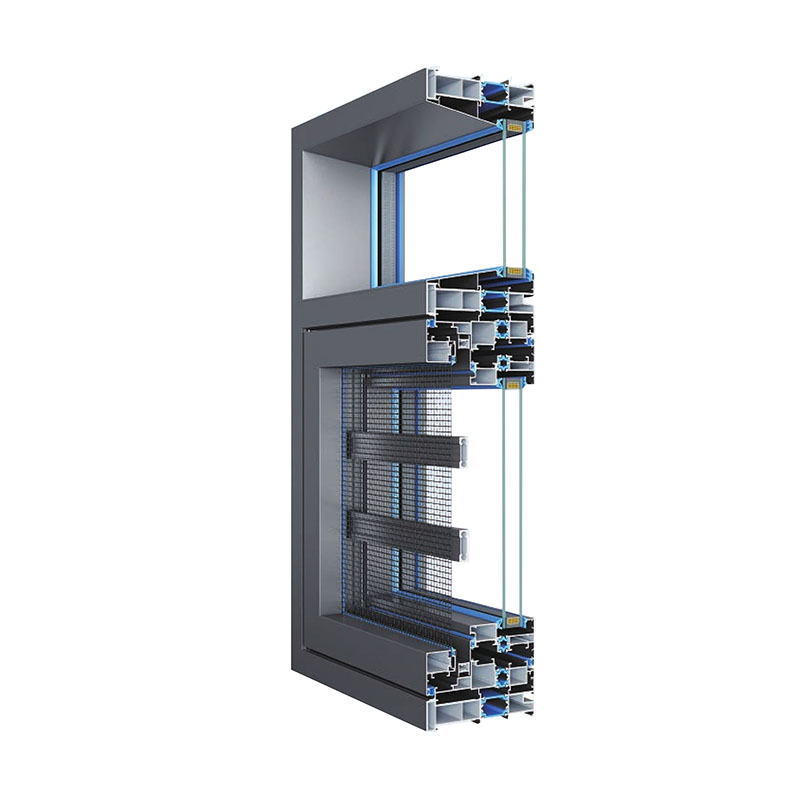
1. Higher Initial Cost Compared to Standard Casement Windows
The most immediate barrier is the upfront investment. A American Style Micro Seam Broken Bridge Casement Window typically costs 40–60% more than a traditional non-thermal-break casement unit. This premium stems from:
-
Multi-chamber polyamide thermal struts that interrupt heat transfer.
-
Micro-seam welding technology requiring precision CNC machinery.
-
Heavier-duty hardware (hinges, handles, multi-point locking systems) rated for frequent operation.
While the energy savings over 10–15 years can offset this expense, the payback period may not appeal to budget-conscious projects. For developers managing tight margins, this often becomes a decisive factor.
2. Complex Installation and Higher Labor Requirements
Unlike drop-in replacement windows, the American Style Micro Seam Broken Bridge Casement Window demands meticulous installation. The micro-seam design creates almost zero visible gaps between the sash and frame, which leaves little room for error. Common installation pitfalls include:
-
Misaligned frames causing binding or air leakage.
-
Improper shimming that distorts the thermal break layer.
-
Incorrect flashing details that compromise water resistance.
Only certified installers with specific training on broken-bridge systems should handle these units. This raises labor costs by an estimated 25–35% per opening compared to standard hung or sliding windows. Guohua provides detailed installation manuals and video guides, but the on-site expertise still remains a bottleneck in many regions.
3. Limited Aftermarket Hardware and Replacement Parts
The specialized hardware—including stainless-steel friction hinges, concealed tilt-turn mechanisms, and micro-adjustable cam locks—is not interchangeable with generic off-the-shelf components. If a handle or gearbox fails after 5–8 years, you often must order replacement parts directly from the original manufacturer. This creates two problems:
| Issue | Impact |
|---|---|
| Lead time for parts | 2–6 weeks if not stocked locally |
| Proprietary tooling | Special wrenches and jigs required for repairs |
| Cost of OEM components | 2–3× higher than universal hardware |
Guohua maintains a global spare-parts inventory, yet expedited shipping fees can negate the perceived value of the window’s durability. For large commercial buildings with hundreds of units, this logistical constraint becomes a serious operational risk.
4. Reduced Glass-to-Frame Ratio Due to Thermal Break Thickness
To achieve the U‑values below 1.0 W/m²K, the American Style Micro Seam Broken Bridge Casement Window incorporates thick polyamide bars (typically 34–40 mm). While this enhances insulation, it also reduces the visible glass area by approximately 8–12% compared to a non-thermal-break frame of the same outer dimension. For architects prioritizing expansive views or daylight harvesting, this trade-off can be disappointing. The micro-seam profile further reinforces the frame’s rigidity but adds to the visual bulk, especially in smaller window openings.
5. Maintenance Challenges with Micro-Seam Surfaces
The "micro-seam" refers to the almost invisible weld joint between frame profiles. While aesthetically pleasing, this tight seam traps dust, pollen, and salt particles in coastal environments. Cleaning requires:
-
Soft microfiber cloths (abrasive pads scratch the anodized or powder-coated finish).
-
Non-acidic, pH-neutral detergents (harsh chemicals degrade the thermal break material).
-
Quarterly lubrication of all moving parts to prevent micro-fretting.
Neglecting this regimen leads to premature hardware seizure and seal degradation. Homeowners accustomed to low-maintenance vinyl windows often find this schedule burdensome.
6. Compatibility Issues with Existing Window Openings
Retrofitting an older building with the American Style Micro Seam Broken Bridge Casement Window frequently necessitates structural modifications. The frame depth (usually 70–85 mm) exceeds that of traditional wood or aluminum windows (50–60 mm). As a result:
-
Interior trim and drywall returns must be rebuilt.
-
Exterior brick molds or siding may need cutting.
-
Load-bearing mullions may require reinforcement to support the heavier sash.
These adjustments add 15–20% to the total project timeline, which can disrupt occupancy schedules for rental properties or commercial spaces.
7. Weight and Handling During Transportation
A single operable sash of a American Style Micro Seam Broken Bridge Casement Window can weigh 40–60 kg (depending on glass thickness and size). This poses safety hazards during on-site handling and increases freight costs. For high-rise installations, crane or hoist equipment is often mandatory, driving up logistics expenses. Guohua offers crated packaging with foam inserts, but damage claims during transit remain a recurring industry challenge.
Frequently Asked Questions (FAQ)
Q1: Does the thermal break in an American Style Micro Seam Broken Bridge Casement Window degrade over time?
A1: The polyamide thermal struts used in these windows are inherently UV-stable and have a service life exceeding 25 years under normal conditions. However, if the window is exposed to extreme temperature cycling (e.g., desert climates with 50°C daytime and near‑freezing nights), the differential expansion between aluminum and polyamide can cause micro-stress fractures at the bond interface. This does not typically compromise thermal performance but can lead to audible creaking during operation. Guohua addresses this by using glass-fiber-reinforced polyamide with a coefficient of thermal expansion matched to aluminum, reducing this risk to less than 0.5% over a 20-year period based on their accelerated aging tests.
Q2: Can I replace just the glass pane of an American Style Micro Seam Broken Bridge Casement Window without changing the entire frame?
A2: Technically yes, but practically it is not recommended. The micro-seam frame is engineered with a specific compression gasket that accommodates a precise glass thickness (usually 24–32 mm for double or triple glazing). Off-spec glass will either fail to seal properly or over-compress the gasket, causing air infiltration and reducing the broken-bridge effect. Furthermore, the glass is typically bonded to the frame using structural silicone, which requires specialized cutting tools to remove. Guohua offers glass-only replacement kits for their units, but these must be ordered with the exact serial number of the original window. Most contractors advise replacing the entire sash rather than attempting a field-glazing repair, as labor costs for glass-only replacement often exceed 70% of a new sash price.
Q3: Are American Style Micro Seam Broken Bridge Casement Windows vulnerable to condensation in humid climates?
A3: On the contrary, the thermal break significantly raises the interior frame surface temperature, which reduces condensation risk compared to standard aluminum frames. However, the micro-seam itself—being a tight mechanical joint—can become a capillary path for moisture if the factory-applied sealant is damaged during installation. In coastal areas with relative humidity above 85%, we recommend specifying a hydrophobic coating on the seam during manufacturing. Guohua provides this as an optional upgrade. Without it, you may observe minor surface sweating at the seam corners during extreme dew-point events, though this does not affect the window’s structural integrity. Proper interior ventilation (e.g., maintaining indoor RH below 60%) eliminates this issue entirely.
Conclusion: Balancing the Trade-Offs
The American Style Micro Seam Broken Bridge Casement Window offers exceptional thermal performance, acoustic insulation, and contemporary aesthetics—yet its disadvantages are not trivial. Higher upfront costs, specialized installation, proprietary hardware, and ongoing maintenance demand a clear-eyed assessment. For projects where energy codes are stringent and long-term operating costs matter more than initial savings, this window remains an industry benchmark. Guohua has engineered its product line to mitigate many of these drawbacks through modular hardware designs, corrosion-resistant coatings, and global technical support. Nevertheless, we always advise clients to simulate total cost of ownership (purchase + installation + 15‑year maintenance) before finalizing specifications.
Ready to evaluate if the American Style Micro Seam Broken Bridge Casement Window fits your next project?
Contact the Guohua technical sales team today for customized U‑value calculations, sample hardware kits, and on-site installation training. Our engineers are available for virtual consultations and can provide references from similar climate zones. Email us at [[email protected]] or fill out the quick inquiry form on our website—we respond within 4 business hours. Let’s build smarter, more efficient buildings together.