Abstract
Cold storage facilities rely heavily on thermal integrity, energy efficiency, and operational reliability. One of the most critical yet often underestimated components is the cold storage door. This article explores how to select the right cold storage door by addressing insulation performance, sealing systems, durability, safety mechanisms, and real-world application requirements. It also breaks down common user pain points such as temperature leakage, high energy consumption, and frequent maintenance issues. By the end, readers will have a structured framework for making informed procurement decisions that enhance both operational efficiency and long-term cost control.
Introduction: Why Cold Storage Doors Matter
Cold storage environments are engineered to maintain precise temperature ranges for perishable goods such as food, pharmaceuticals, and chemicals. While refrigeration systems often receive most of the attention, the cold storage door plays a decisive role in preserving internal conditions. A poorly designed or improperly selected door can lead to air leakage, condensation, frost accumulation, and increased energy consumption.
In industrial logistics chains, even minor thermal instability can result in product degradation and financial losses. Therefore, selecting the right cold storage door is not a secondary consideration but a strategic investment in operational stability.
Common Pain Points in Cold Storage Operations
-
Temperature Leakage: Inadequate sealing causes cold air escape and warm air infiltration.
-
High Energy Costs: Compressors work harder due to frequent temperature fluctuations.
-
Ice Formation: Moisture ingress leads to frost buildup around door frames.
-
Frequent Repairs: Mechanical wear from low-quality materials increases downtime.
-
Operational Inefficiency: Slow or manual doors reduce logistics throughput.
Addressing these challenges begins with selecting a door system engineered for thermal stability and heavy-duty usage cycles.
Types of Cold Storage Doors
Different operational environments require different door configurations. Below are the most commonly used types:
-
Sliding Cold Storage Doors: Ideal for large warehouses with high-frequency forklift traffic.
-
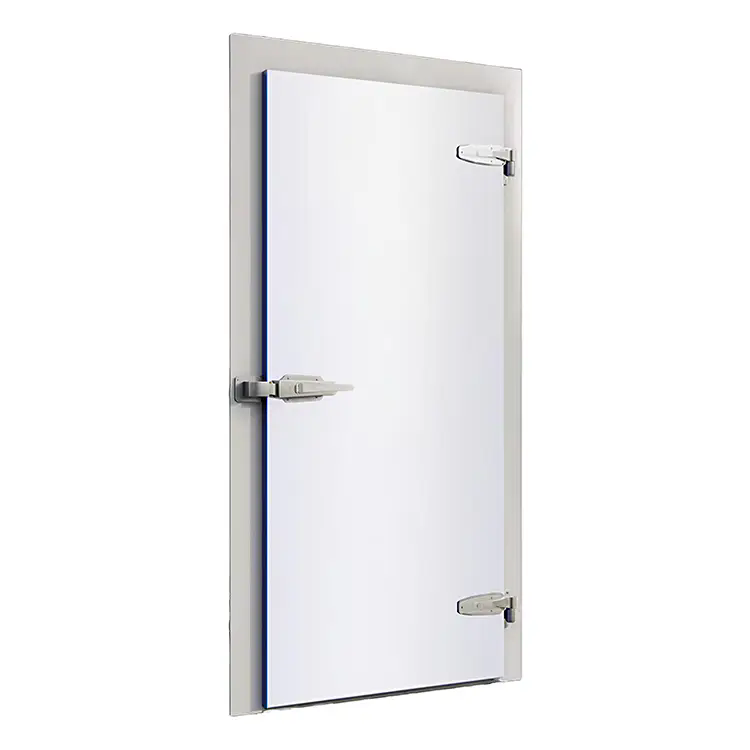
Hinged Cold Storage Doors: Suitable for smaller storage rooms with moderate usage.
-
High-Speed Roll-Up Doors: Designed for environments requiring rapid opening and closing cycles.
-
Sectional Overhead Doors: Provide strong insulation and space-saving vertical movement.
Each type balances insulation, durability, and operational speed differently. Selecting the correct configuration depends on workflow intensity and temperature sensitivity.
How to Choose the Right Cold Storage Door
Choosing the right cold storage door requires evaluating multiple technical and operational parameters:
-
Thermal Insulation Performance: Look for high-density polyurethane foam or equivalent insulation core.
-
Air Tightness: Magnetic or heated sealing strips reduce leakage risk.
-
Durability: Stainless steel or reinforced aluminum frames withstand harsh environments.
-
Opening Frequency: High-cycle doors must support industrial-grade motor systems.
-
Environmental Conditions: Humidity, external temperature, and internal load impact design choice.
A well-balanced cold storage door should minimize thermal loss while maximizing mechanical reliability.
Material & Performance Comparison
|
Material Type
|
Insulation Level
|
Durability
|
Maintenance Requirement
|
Best Use Scenario
|
|
Polyurethane Panel
|
High
|
Medium
|
Low
|
General cold storage warehouses
|
|
Stainless Steel Reinforced
|
High
|
Very High
|
Low
|
Food processing plants
|
|
Aluminum Alloy
|
Medium
|
High
|
Medium
|
Light industrial storage
|
|
PVC Rapid Door Systems
|
Medium
|
Medium
|
Medium
|
High-frequency logistics areas
|
Installation Considerations
Proper installation is essential to ensure long-term performance. Even the highest-quality cold storage door will underperform if installed incorrectly.
-
Ensure wall opening dimensions are precisely measured before fabrication.
-
Verify floor leveling to prevent sealing gaps.
-
Install thermal breaks to minimize conduction loss.
-
Test door cycles multiple times after installation.
Professional installation also reduces future maintenance costs and improves safety compliance.
Maintenance and Lifecycle Optimization
Routine maintenance significantly extends the lifespan of cold storage doors. A structured maintenance plan should include:
-
Regular inspection of sealing strips for wear and deformation.
-
Lubrication of moving mechanical components.
-
Monitoring of motor systems in automated doors.
-
Cleaning of frost accumulation zones.
Preventive maintenance is more cost-effective than emergency repairs and ensures uninterrupted cold chain operations.
Energy Efficiency and Cost Control
Energy consumption in cold storage facilities is directly influenced by door performance. Inefficient sealing or slow closure cycles result in excessive compressor load.
Modern cold storage doors incorporate technologies such as thermal break frames, infrared sensors, and rapid closure systems to minimize air exchange. Over time, these improvements significantly reduce electricity costs and carbon footprint.
Safety and Compliance Factors
Industrial cold storage environments require strict safety compliance. Key safety features include:
-
Emergency manual release systems
-
Anti-collision sensors for forklift traffic
-
Fire-resistant panel materials
-
Anti-slip thresholds in high-moisture areas
Compliance with industrial safety standards ensures both worker protection and operational continuity.
FAQ
Q1: What is the most important factor in selecting a cold storage door?
A: Thermal insulation and sealing performance are the most critical factors, as they directly affect energy efficiency and product preservation.
Q2: How often should cold storage doors be maintained?
A: Basic inspections should be performed monthly, with full maintenance scheduled quarterly or semi-annually depending on usage intensity.
Q3: Can cold storage doors be automated?
A: Yes, most modern systems support automation with sensors, remote control, and high-speed motor drives.
Q4: What causes frost buildup around doors?
A: Poor sealing, humidity infiltration, and temperature imbalance are primary causes.
Conclusion and Professional Recommendation
Selecting a cold storage door is a multidimensional decision involving thermal efficiency, mechanical durability, safety compliance, and operational workflow compatibility. Businesses that prioritize high-quality door systems benefit from reduced energy costs, improved logistics efficiency, and longer equipment lifespan.
For enterprises seeking reliable and engineered cold storage solutions, HANYORK offers advanced cold storage door systems designed for industrial-grade performance and long-term durability. For tailored solutions and project consultation, contact us today and connect with HANYORK specialists to optimize your cold chain infrastructure.