

How Does a Grille for Chery Jetour Integrate With Vehicle Design and Performance?
2025-12-25
Article Abstract
A grille is a critical exterior component that directly interfaces with a vehicle’s cooling system, structural design, and brand identity. This article provides a comprehensive examination of the Grille for Chery Jetour, focusing on structural compatibility, material engineering, airflow management, and long-term durability. Through technical parameters, installation logic, and frequently asked questions, the content explains how this component supports stable vehicle operation while aligning with evolving automotive manufacturing standards. The discussion concludes with production capabilities and service support from Ningbo YC factory.
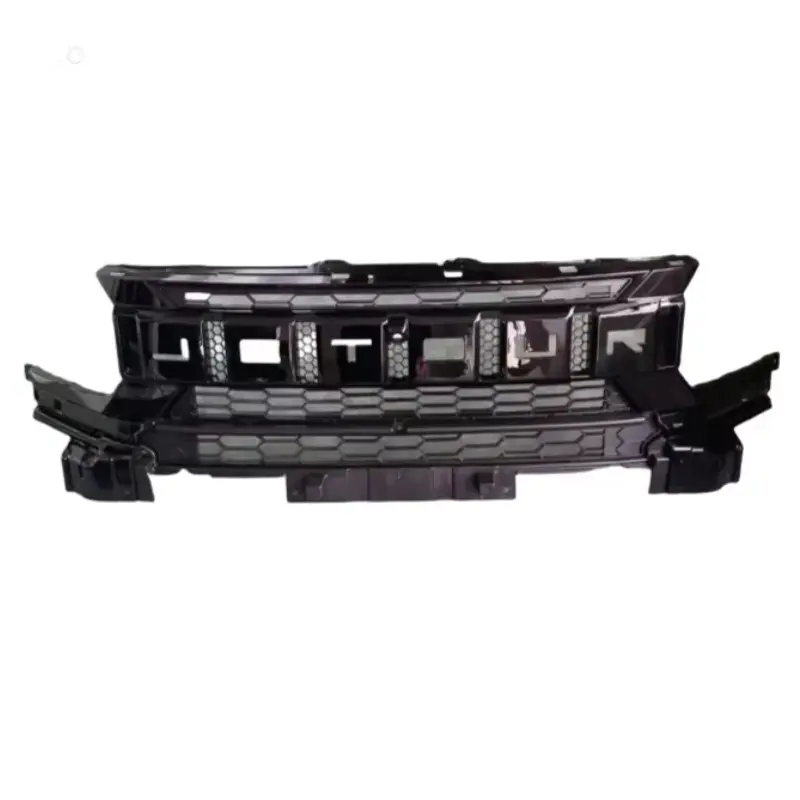
Table of Contents
- 1. How Is the Grille for Chery Jetour Defined Within the Vehicle System?
- 2. How Do Technical Parameters Determine Compatibility and Performance?
- 3. How Does the Grille for Chery Jetour Perform Across Real-World Scenarios?
- 4. How Will Grille Design for Chery Jetour Evolve in the Future?
Outline
- Functional positioning of automotive grilles
- Engineering parameters and material selection
- Installation logic and maintenance considerations
- Frequently asked questions and practical solutions
- Manufacturing perspective and industry outlook
1. How Is the Grille for Chery Jetour Defined Within the Vehicle System?
The Grille for Chery Jetour is designed as a front-end exterior component that serves both mechanical and aesthetic roles. Positioned between the front bumper and the radiator assembly, the grille regulates airflow into the engine bay while acting as a protective barrier against debris. Its geometry and mounting structure are engineered to align precisely with the original vehicle body lines of Chery Jetour models, ensuring consistent fitment without structural modification.
From a systems perspective, the grille interacts directly with the cooling module, including the radiator, condenser, and intercooler where applicable. Proper airflow distribution is essential for thermal balance, particularly under high-load or long-distance driving conditions. As vehicle platforms evolve, grille structures must adapt to tighter tolerances, lighter materials, and increased aerodynamic demands.
In addition to mechanical integration, the grille contributes to visual continuity across the Jetour lineup. Surface texture, opening ratio, and frame thickness are controlled to match factory specifications, supporting uniformity in replacement and aftermarket scenarios.
2. How Do Technical Parameters Determine Compatibility and Performance?
Technical parameters define whether a grille can perform reliably across different driving environments. For the Grille for Chery Jetour, dimensional accuracy, material stability, and mounting precision are core evaluation metrics. These parameters ensure that airflow efficiency and structural integrity remain consistent with OEM-level expectations.
| Parameter | Specification Range | Technical Significance |
|---|---|---|
| Material Type | ABS / PP Composite | Balances impact resistance, weight, and thermal stability |
| Surface Finish | Matte / Gloss / Painted | Supports visual consistency with vehicle exterior |
| Mounting Points | OEM-aligned clip and screw positions | Ensures direct installation without modification |
| Air Opening Ratio | Optimized per Jetour model | Controls airflow volume to cooling system |
| Temperature Resistance | -40°C to 90°C | Maintains dimensional stability under climate variation |
These parameters are validated through dimensional inspection and simulated installation testing. Consistency across production batches is essential for distributors and service centers managing multiple Jetour variants.
Common Questions About Grille for Chery Jetour
Q: How does a grille affect engine cooling efficiency?
A: The grille controls the volume and direction of incoming air. A properly engineered opening ratio ensures sufficient airflow reaches the radiator while minimizing turbulence, supporting stable engine temperature under varying load conditions.
Q: Can the Grille for Chery Jetour be installed without professional tools?
A: Installation typically follows factory mounting points using standard hand tools. No cutting or drilling is required when the grille is manufactured according to OEM alignment standards.
Q: How does material choice influence long-term durability?
A: ABS and PP composites are selected for their resistance to impact, UV exposure, and thermal cycling. These properties reduce the risk of cracking, warping, or discoloration over extended service life.
3. How Does the Grille for Chery Jetour Perform Across Real-World Scenarios?
Real-world performance depends on how the grille responds to environmental stressors such as road debris, temperature fluctuations, and prolonged vibration. In urban driving, the grille must resist minor impacts while maintaining appearance. In highway or off-road conditions, structural rigidity becomes critical to prevent deformation at higher airflow velocities.
Maintenance considerations are equally important. Smooth surface transitions and accessible mounting clips allow for routine cleaning and replacement. This practicality supports lower service time and consistent vehicle presentation, particularly for fleet or commercial users.
From a logistics standpoint, packaging and transportation stability also affect grille performance. Reinforced frames and controlled material thickness reduce the likelihood of deformation during long-distance shipping.
4. How Will Grille Design for Chery Jetour Evolve in the Future?
Future grille development is influenced by trends in electrification, aerodynamic optimization, and modular vehicle architecture. As powertrain cooling requirements change, grille designs may incorporate adaptive openings or reduced frontal apertures. Material innovation will focus on lighter composites with improved recyclability.
Manufacturing processes are also shifting toward higher automation and digital quality control. Precision molds and real-time inspection systems enhance consistency across large production volumes. These advancements support scalable supply for global markets while maintaining alignment with regional regulatory requirements.
Ningbo YC factory supports the production and supply of Grille for Chery Jetour through standardized manufacturing processes, controlled material sourcing, and flexible customization capabilities. With experience in automotive exterior components, the factory provides stable output and technical support for distributors and partners seeking reliable replacement and aftermarket solutions.
For inquiries regarding specifications, production capacity, or cooperation opportunities, please contact us to discuss requirements and service options in detail.