
How Do Patterned Kitchen Stickers Transform Everyday Culinary Spaces?
2025-12-12
Patterned kitchen stickers have emerged as a versatile, design-forward surface solution that enables rapid, cost-effective kitchen updates. Built from PVC or PET composite materials with laminated, waterproof, and heat-resistant coatings, these adhesive films provide both functional protection and aesthetic enhancement.
Product Parameters Overview
The following specifications represent a professional-grade patterned kitchen sticker suitable for residential and light-commercial environments, supporting long-term adhesion, design clarity, and environmental safety:
| Parameter Category | Specification Detail |
|---|---|
| Material | PVC/PET multi-layer composite with UV-cured ink and protective lamination |
| Thickness | 0.12–0.28 mm depending on design and coating layers |
| Adhesive Type | Eco-solvent acrylic pressure-sensitive adhesive (removable or permanent options) |
| Temperature Resistance | -10°C to 70°C operating range; short-term heat resistance up to 120°C for backsplash use |
| Surface Finish | Matte, gloss, embossed, linen-texture, or stone-texture options |
| Waterproof Rating | Fully waterproof surface film with sealed edges when properly installed |
| Chemical Resistance | Resistant to mild detergents, alcohol, cooking oil, and light scrubbing |
| Application Surfaces | Tile, painted wall, stainless steel, MDF boards, glass, laminate, smooth concrete |
| Lifespan | 3–7 years depending on cleaning frequency, heat exposure, and installation quality |
| Print Process | High-definition digital printing (1440 dpi) |
| Environmental Certification | RoHS-compliant and low-VOC adhesive system |
| Standard Sizes | 30×200 cm, 60×300 cm, custom dimensions available |
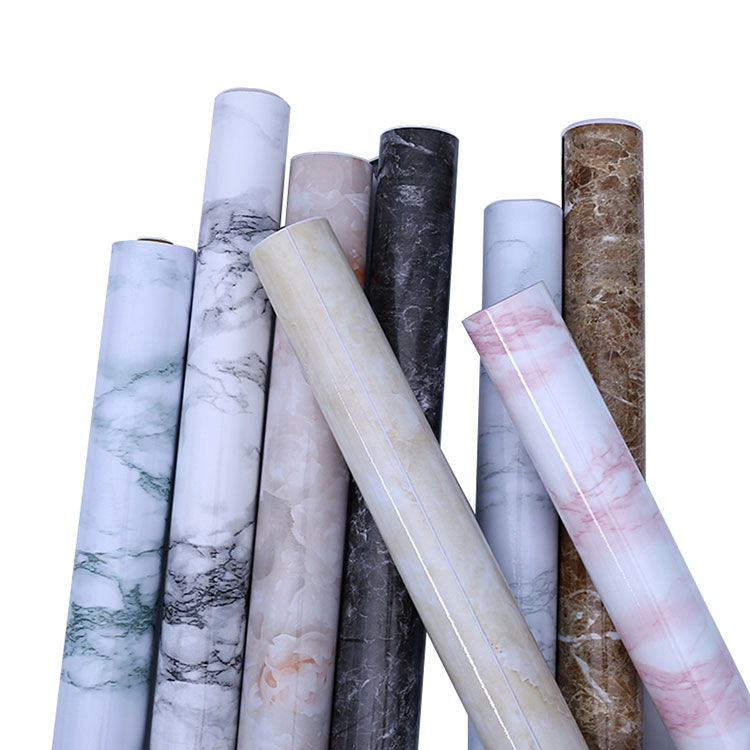
This parameter set reflects the technical foundation enabling patterned kitchen stickers to perform consistently in moisture-prone, high-heat culinary spaces while delivering a broad range of visual effects such as terrazzo, marble, mosaic, floral, geometric, and vintage tile patterns.
How Do Patterned Kitchen Stickers Enhance Functional and Aesthetic Performance in Residential Kitchens?
Patterned kitchen stickers operate at the intersection of design and materials engineering. Their primary contribution lies in allowing homeowners to refresh cabinetry, countertops, backsplashes, and appliance panels without structural renovations. The high-resolution printed patterns create the perception of tile, brick, wood grain, or fabric textures, while the laminated coating protects wall and cabinetry surfaces from humidity, splashes, and grease.
Their adhesive system is engineered to deliver strong bonding while allowing repositioning during installation. This ensures smooth application with minimized wrinkling or air trapping. The stickers’ thin profile maintains flush alignment with edges and corners, enabling seamless transitions between adjoining surfaces.
From a design standpoint, the ability to simulate ceramic tile, terrazzo, marble, and Scandinavian geometric patterns allows homeowners to adapt the overall style of the kitchen—whether rustic, minimalist, industrial, or retro—without engaging in full-scale construction.
Functionally, the waterproof, oil-resistant top layer helps maintain hygiene by preventing moisture infiltration. The film can be wiped clean with common detergents and remains stain resistant even under prolonged cooking activity. These capabilities make patterned kitchen stickers a practical upgrade for rental units, budget-conscious remodels, and seasonal interior refresh projects.
How Do Patterned Kitchen Stickers Compare With Paint, Tile Replacement, and Contact Paper in Terms of Performance and Cost?
Patterned kitchen stickers occupy a unique position within the broader category of surface renovation materials. Their advantages become clearer when comparing them with paint, tile replacement, and traditional contact paper.
Relative to paint, stickers provide far greater resistance to water, heat, and oil splashes. Paint on kitchen walls often degrades near stovetops due to steam and grease exposure, whereas laminated adhesive films maintain their integrity over multiple years. Patterned stickers also enable highly detailed designs that paint cannot replicate without professional stenciling.
Compared to full tile replacement, stickers offer significant reductions in labor, cost, and project duration. Tile installation requires substrate repair, grouting, and sealing, often extending renovation periods to days or weeks. Patterned kitchen stickers can be installed within hours and removed without substrate demolition. While they do not replicate the dimensionality of genuine tile, their design fidelity and textural embossing deliver a strong aesthetic simulation that satisfies most visual requirements.
When contrasted with basic contact paper, patterned kitchen stickers exceed in thickness, durability, and adhesive strength. Standard contact paper often bubbles, lifts at corners, and fades under heat. Professional-grade kitchen stickers are engineered for higher temperatures, UV stability, and stronger long-term adhesion on challenging surfaces such as textured tile.
Overall, patterned kitchen stickers deliver an optimal balance of durability, visual impact, and affordability, making them suitable for both large-scale remodels and targeted updates.
How Will the Patterned Kitchen Sticker Market Evolve as Consumer Preferences Shift Toward Engineered Home Décor Materials?
The future trajectory of patterned kitchen stickers is being shaped by three converging forces: material innovation, customization demand, and the growing trend toward low-disruption home improvement.
First, material science advancement is driving improvements in abrasion resistance, coating hardness, adhesive stability, and eco-friendly formulations. Manufacturers are integrating anti-scratch coatings, anti-mold agents, and anti-UV layers, extending lifecycle performance while increasing design clarity.
Second, customization trends are accelerating. Consumers increasingly request personalized graphics, color-matched patterns, and non-standard dimensions. Digital printing technology is enabling on-demand production of unique patterns, from minimalist Scandinavian motifs to ornate Mediterranean mosaics. This flexibility strengthens the value proposition for homeowners who want distinctive interiors without resorting to costly custom carpentry or tilework.
Third, the market is benefiting from broader acceptance of peel-and-stick renovation solutions. As renters and homeowners seek quick, reversible upgrades, patterned kitchen stickers align well with urban living dynamics, where frequent relocation and design refreshes are common. Their removability without damage to substrate surfaces is a key factor driving adoption.
Looking ahead, integration with antimicrobial coatings, recycled materials, and smart-surface technologies (such as stain-repellent nano-coatings) will likely shape the next wave of product development. These emerging features will expand the stickers’ usability in high-traffic or commercial kitchen environments.
How Can Consumers Maximize Installation Quality and Long-Term Performance When Using Patterned Kitchen Stickers?
Proper installation methodology is essential for maximizing the operational lifespan of patterned kitchen stickers. Surface preparation is the most critical step: walls or cabinetry must be smooth, clean, and dry. Grease residue, uneven paint, or loose tile grout can compromise adhesion. For best results, installers should degrease surfaces with mild detergent, rinse thoroughly, and allow complete drying before application.
Cutting tools, squeegees, and heat guns support precision alignment and bubble elimination. Applying stickers slowly from one edge to the other reduces air trapping. A small amount of heat can help the material conform to corners and edges, especially around uneven surfaces or tile joints.
Post-installation care involves avoiding abrasive pads and limiting direct heat exposure. While patterned kitchen stickers are heat tolerant, placement directly behind gas burners without protective panels may shorten their lifespan. Regular light cleaning with mild detergents maintains clarity and prevents buildup of oil residues.
By following these procedures, users can ensure that patterned kitchen stickers retain their aesthetic quality over multiple years and withstand typical kitchen wear conditions.
Common Questions About Patterned Kitchen Stickers
Q: How can patterned kitchen stickers be removed without damaging the underlying surface?
A: Removal should begin by gently applying heat with a hair dryer to soften the adhesive. Once warmed, the film can be peeled slowly from one corner. High-quality stickers use pressure-sensitive adhesives that release cleanly from non-porous surfaces such as tile, glass, and metal. If slight residue remains, it can be removed with adhesive-safe cleaners. Surfaces like unfinished wood may require extra care due to porous absorption of adhesive.
Q: Are patterned kitchen stickers safe for use near cooking areas with high steam and oil exposure?
A: Yes. Most professional-grade patterned kitchen stickers incorporate laminated waterproof coatings and heat-resistant adhesives suitable for typical cooking environments. They withstand steam, humidity, and splashes of oil when installed correctly. For areas directly adjacent to high-heat burners, a protective barrier or tempered glass panel is recommended to extend sticker lifespan and maintain printed color integrity.
Durable Design, Practical Renovation, and Trusted Manufacturing
Patterned kitchen stickers provide a strategic solution for homeowners seeking rapid kitchen improvements without the disruption and cost of traditional renovation. Their combination of waterproof lamination, high-resolution patterning, adhesive durability, and material versatility enables both functional protection and aesthetic transformation. As technology advances, these products will continue to evolve with improved surface performance, eco-friendly formulations, and expanded customization options.
Hongfeng delivers patterned kitchen stickers built on rigorous manufacturing standards, stable material quality, and long-term design reliability. For detailed specifications, custom pattern development, or bulk procurement guidance, contact us to explore product solutions aligned with your project requirements.