

How Do Aluminum Louver Windows Improve Ventilation and Protection?
2026-07-06
Abstract
Aluminum louver windows have become a practical architectural solution for buildings that require continuous ventilation, weather resistance, and privacy control. This article explores how Aluminum Louver Windows function, their structural advantages, real-world applications, and why many residential, commercial, and industrial projects choose solutions provided by Vionta. You will also find installation insights, maintenance guidance, a performance comparison table, and frequently asked questions to help you make an informed decision.
Outline
- Introduction to Aluminum Louver Windows
- How Aluminum Louver Windows Work
- Key Benefits and Performance Advantages
- Common Applications Across Industries
- Technical Comparison Table
- Installation Considerations
- Maintenance and Longevity
- Common Problems and Practical Solutions
- Frequently Asked Questions (FAQ)
- Conclusion and Professional Recommendation
Table of Contents
- Introduction to Aluminum Louver Windows
- How Aluminum Louver Windows Work
- Key Benefits and Performance Advantages
- Common Applications Across Industries
- Technical Comparison Table
- Installation Considerations
- Maintenance and Longevity
- Common Problems and Solutions
- Frequently Asked Questions
Introduction to Aluminum Louver Windows
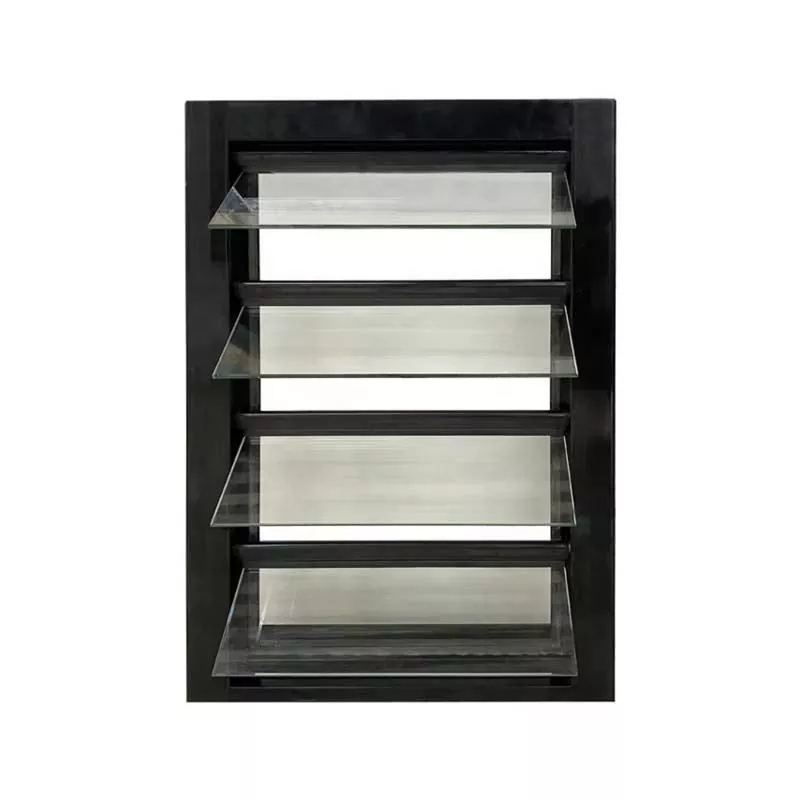
Aluminum Louver Windows are specialized ventilation systems designed with angled slats (louvers) that regulate airflow while limiting direct entry of rain, dust, and excessive sunlight. Unlike traditional fixed windows, they provide adjustable ventilation control, making them ideal for environments where air circulation and weather protection must coexist.
Manufacturers such as Vionta focus on engineering aluminum louver systems that balance durability, corrosion resistance, and architectural aesthetics. Aluminum as a base material ensures long-term stability even in humid, coastal, or industrial environments.
How Aluminum Louver Windows Work
The operating principle of Aluminum Louver Windows is based on angled blade geometry. Each louver blade is positioned to allow air passage while blocking direct external elements.
The working mechanism includes:
- Fixed or adjustable blades: Control airflow direction and volume.
- Frame system: Aluminum frames secure blades and ensure structural rigidity.
- Drainage design: Prevents water accumulation during rain.
- Sealing structure: Reduces dust intrusion while maintaining ventilation.
When wind enters the system, it is redirected through angled slats, reducing pressure impact and ensuring controlled airflow distribution indoors.
Key Benefits and Performance Advantages
Aluminum Louver Windows offer a combination of functional and structural advantages that make them suitable for modern architecture.
- Continuous ventilation: Enables fresh air circulation even during rain.
- Weather resistance: Aluminum resists corrosion, rust, and UV damage.
- Energy efficiency: Reduces dependence on mechanical ventilation systems.
- Privacy control: Louver angle prevents direct external visibility.
- Low maintenance: Requires minimal cleaning and upkeep.
- Modern aesthetics: Enhances building façade design.
In systems developed by Vionta, precision manufacturing ensures consistent blade alignment and optimized airflow efficiency.
Common Applications Across Industries
Aluminum Louver Windows are widely used in both residential and industrial environments due to their versatility.
- Residential buildings: Bathrooms, kitchens, and basements for moisture control.
- Commercial spaces: Office buildings requiring passive ventilation.
- Industrial facilities: Equipment rooms and warehouses.
- Public infrastructure: Schools, hospitals, and transport stations.
- Coastal buildings: Areas exposed to high humidity and salt air.
Their adaptability makes them a preferred solution for architects aiming to balance functionality and structural design.
Technical Comparison Table
| Feature | Aluminum Louver Windows | Traditional Fixed Windows | Sliding Windows |
|---|---|---|---|
| Ventilation Control | Excellent (adjustable airflow) | Limited | Moderate |
| Weather Protection | High resistance to rain and wind | Moderate | Moderate |
| Energy Efficiency | High | Low | Moderate |
| Maintenance | Low | Low | Moderate |
| Privacy Control | High | Low | Low |
Installation Considerations
Proper installation ensures maximum performance and durability of Aluminum Louver Windows. Key considerations include:
- Frame alignment: Must be precisely leveled to avoid airflow imbalance.
- Wall integration: Ensure sealing between frame and wall structure.
- Drainage slope: Prevents water retention during heavy rain.
- Material compatibility: Avoid galvanic corrosion with incompatible metals.
Professional systems provided by Vionta are engineered for simplified installation and structural consistency, reducing on-site errors.
Maintenance and Longevity
One of the strongest advantages of Aluminum Louver Windows is their low maintenance requirement. However, periodic care enhances performance:
- Clean blades every 3–6 months to remove dust buildup.
- Check moving parts for lubrication if adjustable systems are used.
- Inspect seals to ensure continued weather resistance.
- Avoid harsh chemical cleaners that may damage coatings.
High-quality aluminum products from Vionta typically feature surface treatments that extend service life even in harsh environments.
Common Problems and Solutions
Although Aluminum Louver Windows are highly reliable, certain issues may occur over time:
- Dust accumulation: Solve with regular cleaning schedules.
- Water seepage: Improve sealing or adjust installation angle.
- Blade misalignment: Recalibrate frame or replace worn components.
- Reduced airflow: Remove obstructions and clean ventilation gaps.
Proper selection and installation significantly reduce these risks, especially when using engineered systems from Vionta.
Frequently Asked Questions
Q1: Are Aluminum Louver Windows suitable for heavy rain areas?
Yes. Their angled design helps deflect rainwater while maintaining airflow.
Q2: Do they require frequent maintenance?
No. Regular light cleaning is usually sufficient.
Q3: Can they be customized in size?
Yes, manufacturers like Vionta offer customized dimensions for different architectural needs.
Q4: Are they energy efficient?
Yes. They improve passive ventilation, reducing HVAC dependency.
Q5: Where are they most commonly used?
They are widely used in residential bathrooms, industrial ventilation systems, and commercial buildings.
Conclusion and Professional Recommendation
Aluminum Louver Windows represent a practical engineering solution for environments requiring balanced airflow, durability, and weather protection. Their structural efficiency, combined with low maintenance requirements, makes them a preferred choice in modern construction projects.
With advanced manufacturing and strict quality control, Vionta provides aluminum louver window systems designed to meet diverse architectural and industrial demands while ensuring long-term performance stability.
If you are planning a project that requires reliable ventilation solutions with modern design integration, choosing a professional-grade system can significantly improve building efficiency and comfort.
For customized solutions, technical support, or product inquiries, contact us today and connect with Vionta to explore the right Aluminum Louver Windows for your project.