

How Are Fixed Windows Integrated Into Contemporary Architectural Projects?
2025-12-31
Article Abstract
Fixed windows are non-operable glazing systems designed to provide uninterrupted views, stable daylight access, and consistent thermal performance. This article examines how fixed windows are specified, engineered, and applied across residential, commercial, and institutional buildings. By focusing on structural logic, material parameters, and performance benchmarks, the discussion addresses how fixed windows align with current construction standards and architectural planning practices.
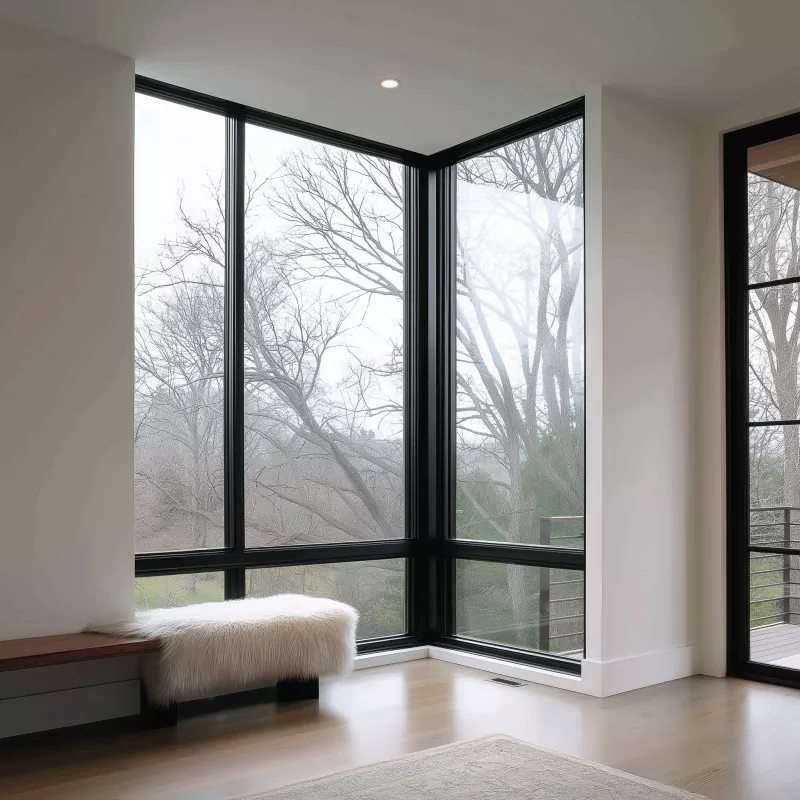
Table of Contents
- How Do Fixed Windows Function Within Building Envelopes?
- How Are Fixed Window Specifications Defined and Evaluated?
- How Are Fixed Windows Applied Across Different Building Types?
- How Are Fixed Windows Expected to Evolve in Future Construction?
Outline
- Overview of fixed window systems
- Technical parameters and material configurations
- Application logic in residential and commercial architecture
- Regulatory alignment and future development directions
How Do Fixed Windows Function Within Building Envelopes?
Fixed windows are designed as sealed glazing units that do not open or close. Their primary role within a building envelope is to allow natural light penetration while maintaining a stable barrier against external environmental factors. Unlike operable systems, fixed windows rely on precision-engineered frames and glazing assemblies to ensure long-term dimensional stability.
From an architectural perspective, fixed windows are commonly integrated into curtain wall systems, façade compositions, and load-distribution layouts where ventilation is managed separately. Their static nature reduces mechanical stress points, allowing for larger glass spans and simplified structural calculations.
In building envelope theory, fixed windows contribute to continuity in insulation layers and air barriers. When properly installed, they minimize air infiltration and reduce variability in thermal transfer, making them a predictable component in energy modeling.
How Are Fixed Window Specifications Defined and Evaluated?
The performance of fixed windows is determined by a combination of frame material, glazing configuration, and installation tolerances. Specifications are typically aligned with regional building codes and project-specific performance targets.
| Parameter | Specification Range | Technical Notes |
|---|---|---|
| Frame Material | Aluminum / Aluminum-Clad / Composite | Selected based on structural load and corrosion resistance |
| Glazing Type | Double or Triple Insulated Glass | Improves thermal and acoustic performance |
| Glass Thickness | 5 mm – 12 mm per pane | Adjusted according to wind load requirements |
| Overall U-Value | ≤ 1.4 W/m²·K | Evaluated for compliance with energy codes |
| Sound Reduction | 30–45 dB | Dependent on glazing composition |
Evaluation processes often include laboratory testing for air leakage, water penetration, and structural deflection. These metrics ensure that fixed windows perform consistently under long-term exposure.
Fixed Windows: Common Questions and Detailed Answers
Q: How do fixed windows differ structurally from operable windows?
A: Fixed windows lack hinges, locks, and opening mechanisms, which allows the frame to be fully sealed. This structural simplicity supports larger glass areas and reduces mechanical failure points over time.
Q: How is thermal performance maintained without ventilation?
A: Thermal performance is managed through insulated glazing units and continuous sealing. Ventilation requirements are typically addressed through separate systems such as mechanical ventilation or operable window zones.
Q: How are fixed windows maintained over long service periods?
A: Maintenance focuses on seal integrity, glass surface cleaning, and periodic inspection of frame interfaces. The absence of moving parts generally lowers maintenance frequency.
How Are Fixed Windows Applied Across Different Building Types?
In residential architecture, fixed windows are frequently positioned in areas where privacy or elevation limits the need for operability, such as stairwells, double-height living spaces, and façade compositions. Their placement supports consistent daylight distribution without interrupting interior layouts.
Commercial buildings utilize fixed windows extensively within curtain wall systems. Office towers, educational facilities, and healthcare buildings rely on fixed glazing to standardize façade modules and streamline construction schedules.
In industrial and institutional projects, fixed windows serve as controlled visual access points, supporting safety requirements while maintaining environmental separation.
How Are Fixed Windows Expected to Evolve in Future Construction?
Future development of fixed windows is closely tied to advancements in glazing technology and digital design coordination. Increased adoption of building information modeling allows fixed windows to be optimized for structural loads and solar exposure during early design stages.
Material innovation is also influencing frame profiles, enabling slimmer sightlines while maintaining structural integrity. Regulatory trends indicate continued emphasis on predictable performance metrics, where fixed windows offer measurable compliance advantages.
Within this evolving landscape, manufacturers such as Euplai Windows and Doors Co., Ltd are aligning product development with global construction standards and project-driven customization requirements. Fixed window systems produced under such frameworks are positioned to integrate seamlessly into diverse architectural contexts.
For project-specific specifications, technical consultations, or detailed product documentation, contact us to discuss how fixed window systems can be configured to meet defined building objectives.