

How Are Casement Doors Designed to Meet Residential and Commercial Building Standards?
2025-12-29
Article Abstract
Casement doors are widely specified in residential and light-commercial architecture due to their adaptability, structural performance, and compatibility with contemporary building envelopes. This article provides a comprehensive examination of casement doors, focusing on design logic, material parameters, hardware systems, installation standards, and long-term application trends. Through a how-based analytical framework, the discussion explains how casement doors respond to regulatory requirements, climate performance expectations, and evolving architectural preferences, while maintaining practical usability across different markets.
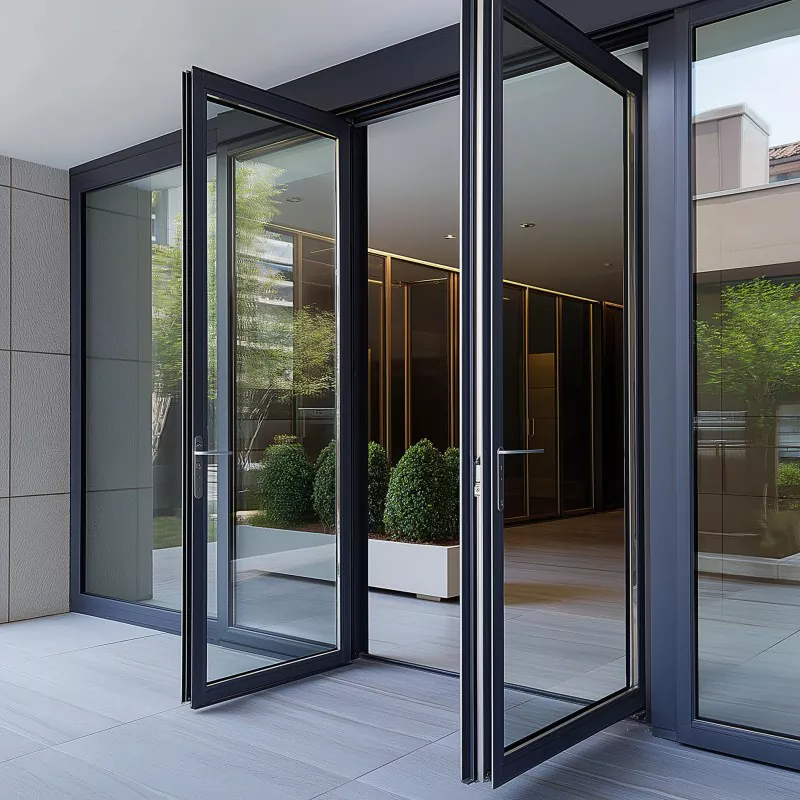
Table of Contents
- How Do Casement Doors Function Within Modern Building Envelopes?
- How Are Casement Door Specifications Defined for Performance and Compliance?
- How Should Casement Doors Be Selected and Installed for Long-Term Use?
- How Will Casement Doors Adapt to Future Architectural and Market Demands?
Content Outline
- Introduction to casement door systems and use cases
- Core structural and material parameters
- Performance-driven selection logic
- Installation, maintenance, and lifecycle considerations
- Industry development and application outlook
How Do Casement Doors Function Within Modern Building Envelopes?
Casement doors are side-hinged door systems that open outward or inward along a vertical axis, forming a continuous seal against the frame when closed. Unlike sliding or folding door systems, casement doors rely on compression locking mechanisms that enhance air tightness and water resistance. This functional characteristic makes them suitable for exterior openings where environmental control and structural integrity are primary considerations.
Within modern building envelopes, casement doors are often integrated as terrace doors, garden access doors, balcony transitions, or secondary entrance systems. Their design allows for full opening clearance, which supports ventilation efficiency and unobstructed access. From an architectural standpoint, casement doors align with both traditional façades and minimalist contemporary designs due to their clean frame geometry and customizable surface treatments.
The operational logic of casement doors also supports compatibility with insulated glazing units and multi-point locking systems. These features allow casement doors to meet increasingly stringent energy-efficiency codes while maintaining ease of operation for end users.
How Are Casement Door Specifications Defined for Performance and Compliance?
Casement door specifications are determined by a combination of structural load requirements, thermal performance targets, acoustic control needs, and local building regulations. Manufacturers typically define these parameters during the system design phase to ensure consistency across production and installation environments.
The following table outlines common technical parameters associated with professionally manufactured casement doors:
| Parameter | Typical Specification Range | Purpose |
|---|---|---|
| Frame Material | Aluminum alloy / uPVC / Wood-aluminum composite | Structural stability and corrosion resistance |
| Frame Depth | 70–100 mm | Thermal insulation and load-bearing capacity |
| Glass Configuration | Double or triple insulated glazing | Energy efficiency and sound reduction |
| Hardware System | Multi-point locking with stainless steel hinges | Security and operational durability |
| Surface Treatment | Powder coating / anodizing / wood grain transfer | Weather resistance and aesthetic integration |
These parameters are typically aligned with standards such as ASTM, EN, or regional building codes, depending on the target market. Proper specification ensures that casement doors perform reliably under wind pressure, temperature fluctuation, and repeated operational cycles.
Casement Doors Common Questions and Answers
Q: How do casement doors achieve better sealing compared to sliding doors?
A: Casement doors close by pressing the sash firmly against the frame using compression locks, creating a continuous seal that reduces air and water infiltration more effectively than sliding track-based systems.
Q: How is glass thickness selected for casement doors?
A: Glass thickness is determined by door size, wind load calculations, safety requirements, and energy performance targets. Larger openings typically require thicker insulated glass units to maintain structural stability.
Q: How often should casement door hardware be maintained?
A: Routine inspection and lubrication of hinges and locking points once or twice per year is generally sufficient to maintain smooth operation and extend service life.
How Should Casement Doors Be Selected and Installed for Long-Term Use?
Selecting casement doors for a specific project involves evaluating environmental exposure, usage frequency, and architectural intent. In coastal or high-humidity regions, corrosion-resistant materials and enhanced surface treatments are typically prioritized. For urban residential buildings, acoustic insulation may play a more critical role.
Installation accuracy directly affects the long-term performance of casement doors. Proper alignment of the frame, controlled expansion gaps, and correct sealing practices are essential to prevent operational stress and premature wear. Professional installation teams typically follow standardized procedures to ensure load transfer and weatherproofing integrity.
From a lifecycle perspective, casement doors are valued for their serviceability. Individual components such as hinges, handles, and glazing units can often be replaced or upgraded without removing the entire door system, supporting cost-effective long-term ownership.
How Will Casement Doors Adapt to Future Architectural and Market Demands?
As building regulations continue to emphasize energy conservation and occupant comfort, casement doors are expected to evolve through improved thermal break technologies, advanced sealing systems, and smarter hardware integration. These developments will allow casement doors to maintain relevance in both new construction and renovation markets.
Architectural trends suggest growing demand for slim-profile frames, larger glazing areas, and customizable finishes. Casement doors are particularly well-positioned to accommodate these requirements due to their structural versatility and modular design potential.
In this context, manufacturers such as Euplai Windows and Doors Co., Ltd continue to focus on system optimization, material refinement, and application-driven design strategies. By aligning product development with real-world building needs, casement doors can remain a dependable solution across diverse architectural scenarios.
For project-specific consultation, technical documentation, or customized casement door solutions, readers are encouraged to contact us to explore how professional system design can support long-term building performance.