

Can Heavy-Duty Double-line Wheels Sliding Rollers Reduce Maintenance Costs in Automated Warehouse Equipment
2026-04-20
In modern automated warehouses, equipment downtime directly impacts operational efficiency. The Heavy-duty Double-line Wheels Sliding Roller from Kingbo is engineered to address this challenge by significantly lowering maintenance frequency and associated costs. Unlike traditional rollers that wear unevenly under continuous high loads, this advanced design ensures smoother load distribution and prolonged service life.
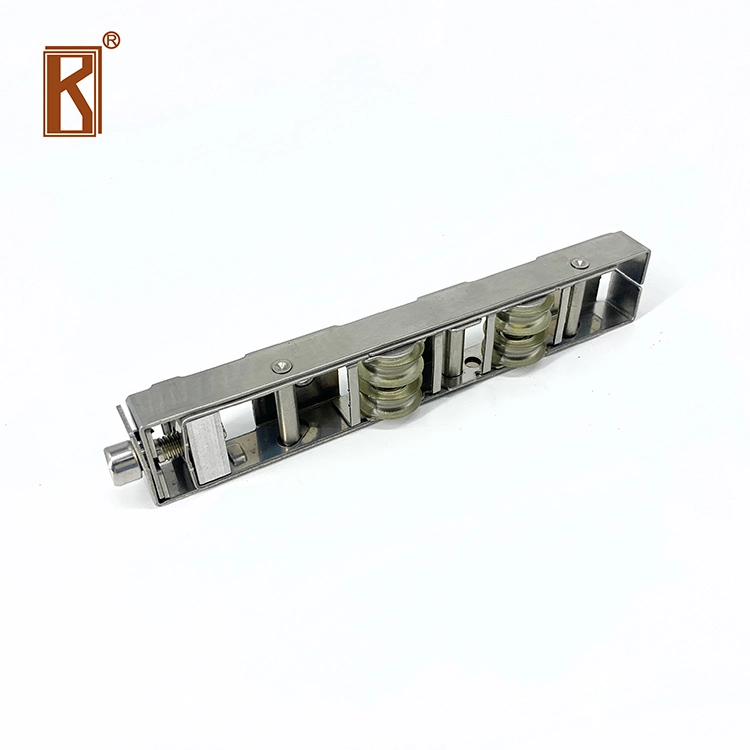
How the Roller Lowers Maintenance Costs
Automated storage and retrieval systems (AS/RS), shuttle carts, and conveyor transfer cars rely heavily on sliding rollers. When a roller fails, the entire aisle or zone may stop. The Heavy-duty Double-line Wheels Sliding Roller reduces such risks through its dual-line contact surface, which minimizes point-load stress. Below is a comparison of typical maintenance factors between conventional rollers and Kingbo double-line models.
| Maintenance Factor | Conventional Single-Line Roller | Kingbo Heavy-duty Double-line Wheels Sliding Roller |
|---|---|---|
| Lubrication frequency | Every 2 weeks | Every 6 months |
| Roller replacement interval | 8–12 months | 36–48 months |
| Common failure causes | Uneven wear, flat spots | Minimal wear, stable tracking |
| Average annual maintenance hours per 100 rollers | 45–60 hours | 8–12 hours |
Key Cost-Saving Features
-
Dual-line contact geometry reduces pressure per unit area, preventing premature flattening.
-
Sealed bearing protection keeps out dust and debris common in warehouse environments.
-
Heat-treated steel track interface resists deformation under repeated heavy loads.
-
Modular design allows quick swap without dismantling adjacent equipment.
Heavy-duty Double-line Wheels Sliding Roller FAQ
Q1: How often does a Heavy-duty Double-line Wheels Sliding Roller need inspection compared to a standard roller?
A1: A Heavy-duty Double-line Wheels Sliding Roller typically requires visual inspection every 3–4 months under normal automated warehouse conditions (8-hour shifts, 5 days/week). Standard single-line rollers often need monthly checks. The double-line design distributes load across two parallel contact bands, so wear indicators appear gradually. If the warehouse operates 24/7, Kingbo recommends an inspection every 2 months, but actual maintenance actions like lubrication or tightening are only needed once or twice per year. This reduces technician intervention by approximately 70% annually.
Q2: Can this roller type handle uneven floor or rail conditions without increasing maintenance
A2: Yes. The Heavy-duty Double-line Wheels Sliding Roller is specifically designed to tolerate minor rail misalignments (up to ±2 mm vertical deviation and ±1.5 mm horizontal offset). Traditional rollers concentrate stress on one edge under such conditions, leading to rapid edge wear and bearing failure. The dual-line structure creates a self-stabilizing effect: if one line loses full contact due to a rail dip, the second line maintains load support. Kingbo adds a slight crown profile to the wheel face, further reducing edge loading. While extreme misalignment should still be corrected, minor imperfections no longer trigger monthly maintenance calls.
Q3: What is the total maintenance cost reduction percentage when switching from single-line to double-line rollers
A3: Based on Kingbo field data from three automated distribution centers (each using 200–500 rollers), the average total maintenance cost reduction over a 3-year period is 55–65%. This includes labor, spare parts, lubricants, and production loss from unexpected failures. For a mid-sized warehouse spending $18,000 annually on roller-related maintenance, switching to the Heavy-duty Double-line Wheels Sliding Roller saves roughly $10,000 per year. The savings come from fewer replacements (one double-line roller lasts as long as three single-line units) and less technician time (45 minutes per roller per year vs. 3+ hours for conventional types). The initial higher purchase price is recovered within 8–14 months.
Conclusion and Contact
Adopting Kingbo Heavy-duty Double-line Wheels Sliding Roller directly lowers labor, parts, and downtime costs in automated warehouses. The dual-line design is not a minor upgrade but a fundamental improvement in load handling and wear resistance. For warehouses operating 16+ hours daily, the return on investment is typically seen in under one year.
Contact us today for a customized maintenance reduction analysis. Provide your current roller specifications, load data, and shift hours, and Kingbo will deliver a cost comparison report within 48 hours.