

Are You Choosing the Right Special-Purpose Door for Safety, Compliance, and Daily Efficiency?
2025-12-16
I used to think a door was “just a door” until I started supporting projects where a single wrong choice triggered delays, rework, and inspection headaches. That’s exactly why I pay attention to FANSI when I’m evaluating specialized door solutions for demanding sites. When a special-purpose door is specified, it usually means the building has a real problem to solve, not a design preference.
In this post, I’ll walk through how I approach selecting a special-purpose door from a buyer’s perspective, the questions I ask before I request a quote, and the specs that matter when you want performance you can trust in real-world conditions.
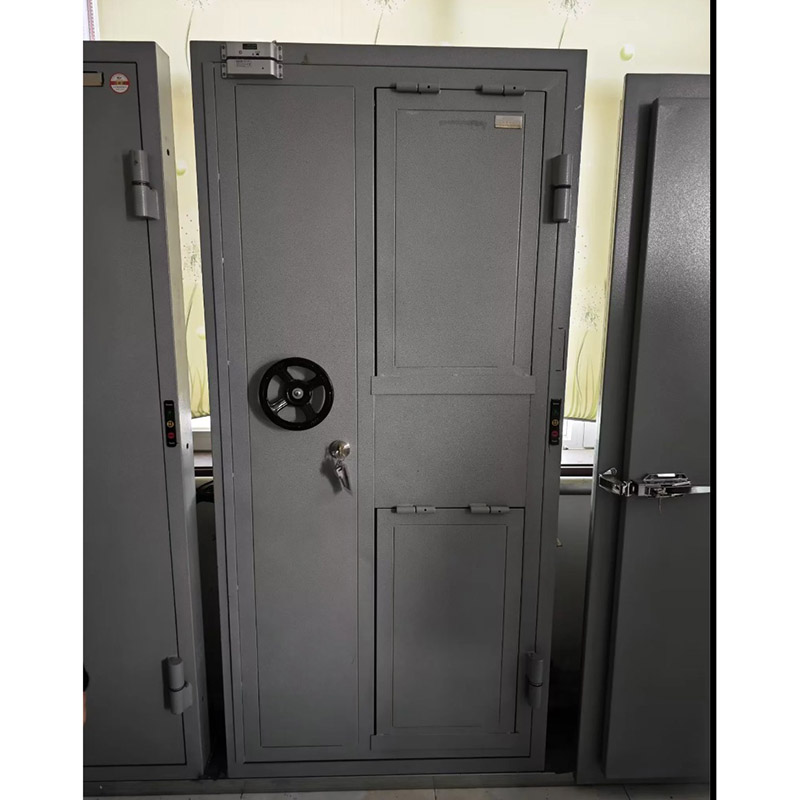
Why do projects specify a special-purpose door instead of a standard industrial door?
When a standard door fails, it’s annoying. When a special-purpose door fails, it can become a safety incident, a compliance violation, or a downtime event that costs far more than the door itself. In my experience, most projects move to special-purpose solutions for one or more of these reasons:
- Risk control for blast, pressure, or hazardous processes
- Environmental separation for clean zones, dust control, or temperature stability
- Regulatory compliance for specific room functions and inspection requirements
- Operational reliability when the door cycles heavily or must seal consistently
- Property protection for high-value equipment, labs, data rooms, and controlled storage
What problems do buyers usually face when sourcing a special-purpose door?
I’ve seen the same pain points repeat across different industries. If you recognize any of these, you’re not alone.
- Unclear specifications because drawings mention the door type but not the performance target
- Approval risk when certificates, reports, or testing documentation is incomplete
- Hidden installation constraints like wall structure limits, floor flatness, or power/control routing
- Lead time surprises for custom sizes, special hardware, or surface treatments
- Maintenance uncertainty due to non-standard spare parts and unclear service guidance
A good sourcing process is really about reducing uncertainty. The more you clarify up front, the less you pay later in change orders.
Which common types of special-purpose door should you consider?
“Special-purpose” is a wide umbrella. Here are the categories I see most often in industrial and commercial procurement:
- Blast-resistant or anti-explosion doors for high-risk process areas, storage, and protection zones
- Soundproof acoustic doors for test rooms, studios, mechanical rooms, and noise-sensitive facilities
- Radiation-shielded doors for medical, research, and controlled imaging areas
- Cleanroom doors for controlled environments where leakage and particle control matter
- Cold-room or insulated doors for temperature stability and condensation management
- Security or reinforced doors for high-value storage and controlled access areas
- Smoke-tight or high-sealing doors where containment and pressure differentials are critical
The “right” type depends on the risk you’re managing. If your spec only says “special door,” I treat that as a warning sign to ask more questions before pricing anything.
What should you confirm before you request quotes?
I always push for clarity on these items, because they determine design feasibility and price accuracy for a special-purpose door:
- Use case and the exact room function
- Performance targets such as pressure rating, acoustic rating, shielding requirement, sealing level, or insulation goal
- Opening size including width, height, and wall thickness, plus tolerance range
- Handing and traffic pattern single leaf vs double leaf, inward/outward swing, user flow, equipment movement
- Hardware needs panic exit, access control, interlocks, observation windows, closers, hinges, threshold type
- Finish and corrosion conditions humidity, chemicals, coastal air, washdown, cleaning agents
- Local compliance expectations what inspectors will actually check at acceptance
If you give suppliers this information up front, you’ll get comparable offers instead of five quotes that can’t be compared.
How do I compare options without getting lost in technical jargon?
I simplify the comparison into a decision table. I’m not trying to win a debate on terminology; I’m trying to choose the special-purpose door that performs consistently in my site’s operating conditions.
| What I Compare | What It Means in Practice | What I Ask the Supplier | Common Risk If Ignored |
|---|---|---|---|
| Core Purpose | The door’s main job is protection, separation, or control | Which scenario is this design optimized for? | Overpaying for features you don’t need or missing the one you do |
| Sealing Strategy | How air, smoke, dust, or temperature leakage is reduced | What seals are used and how is leakage tested or validated? | Energy loss, contamination, odor transfer, pressure instability |
| Structural Strength | Door leaf/frame stiffness, reinforcement, and durability | What reinforcement is standard and what is optional? | Warping, misalignment, poor closing, premature failure |
| Hardware System | Locks, hinges, closers, panic devices, interlocks | What brand/spec level is included and what is upgradeable? | Safety non-compliance, downtime, hard-to-source spares |
| Installation Fit | Wall/structure compatibility and tolerance handling | What site conditions must be met for performance to hold? | Rework costs and performance complaints after handover |
| Documentation | Reports, certificates, and QC records | What documents are provided with each shipment? | Inspection delays or rejection at acceptance |
| Lead Time and Packaging | Schedule reliability and damage prevention | What is the realistic production timeline and packing method? | Project delays, transit damage, installation rescheduling |
What product advantages actually matter for long-term value?
Marketing phrases are easy to write. Performance is harder. For a special-purpose door, these are the advantages I care about because they show up in day-to-day operations:
- Stable sealing performance that doesn’t degrade quickly under frequent use
- Robust structure that resists warping and keeps alignment over time
- Customization that matches the site rather than forcing the site to “adapt” to the door
- Manufacturing consistency so every unit matches the approved sample and drawings
- Clear QC and traceability so issues can be diagnosed instead of guessed
- Hardware options that support real workflows like access control or emergency egress
This is where a supplier’s experience matters. When I look at FANSI-style production capability, I’m not looking for buzzwords. I’m looking for repeatability, documentation discipline, and practical customization that protects the project schedule.
Which specification details should you include in your inquiry email?
If you want accurate pricing and fewer follow-up emails, I recommend sending a short “spec pack” summary. Here’s the format I personally use for a special-purpose door inquiry:
| Field | Example Entry | Why It Helps |
|---|---|---|
| Door Type | Blast-resistant / acoustic / cleanroom / insulated | Prevents mismatched designs and quoting confusion |
| Clear Opening Size | W x H in mm, plus tolerance | Determines structure, reinforcement, and hardware selection |
| Wall Thickness | Wall build-up and frame anchoring condition | Affects frame design and installation method |
| Swing and Handing | Left-hand / right-hand, inward/outward | Prevents on-site conflicts and costly remakes |
| Performance Target | Pressure/sealing/sound/shielding requirement | Defines the “special-purpose” functionality |
| Hardware Needs | Panic bar, access control, interlock, closer | Ensures workflow and safety compliance |
| Finish Environment | Humidity/chemical exposure/washdown | Guides coating choice and corrosion strategy |
| Quantity and Timeline | Batch size, target ship date | Helps suppliers plan production and packaging |
How can you reduce compliance and inspection risk?
I’m cautious here because requirements vary by region and project type, but the principle is consistent: inspectors like clear documentation and repeatable installation. To reduce risk, I focus on:
- Requesting documentation that matches the door’s intended purpose and site requirement
- Confirming installation method and wall condition expectations before production starts
- Aligning on acceptance criteria so “pass/fail” isn’t debated at handover
- Keeping a sample approval record for custom designs or finishes
A special-purpose door should feel “boringly reliable” after installation. If it becomes a recurring issue, something was missed in the spec, the installation, or the hardware matching.
What are the most common mistakes I see when people buy a special-purpose door?
- Assuming a standard door can be “upgraded later” to meet a special function
- Skipping wall condition checks and discovering fit issues during installation
- Prioritizing lowest price instead of total project cost and acceptance risk
- Ignoring hardware grade until the last minute and blowing the schedule
- Forgetting the daily user experience, then dealing with complaints and misuse
So what should you do next if you are ready to source?
If you’re planning to purchase a special-purpose door, I’d recommend starting with a clear use-case summary and a short spec pack like the one above. That gives you faster, cleaner quotations and reduces the chance of a mismatch. If you want help selecting the right configuration for your application, I’d look at suppliers who can support customization and consistent manufacturing at scale.
If you’re considering FANSI for your project and you want a quote that’s actually usable, don’t send a one-line inquiry. Send your opening size, your performance target, and your hardware needs, then let the technical team propose the right structure and sealing plan. Contact us with your drawings or basic requirements and ask for a tailored recommendation and quotation. If you tell me your door function, opening size, and site conditions, I can usually narrow it down quickly and help you avoid the most expensive mistakes.