

OEM Self Storage Unit Design Tips for Maximum Durability and Security
2026-07-30
Self storage facilities face relentless wear and tear—from harsh weather to round-the-clock access. If units aren’t built to last, security gaps and structural failures become costly liabilities. That’s why smart operators turn to OEM solutions engineered for resilience. With NORTON’s expert design approach, durability and protection aren’t afterthoughts—they’re built into every component. Here are the practical tips that can transform your next storage project into a fortress of reliability.
Choose Steel Thickness Like It's Your Last Line of Defense
Thicker steel isn’t just about brute strength—it’s about resilience when conditions turn unpredictable. A panel that bends under pressure or dents from stray impacts can undermine the entire structure’s integrity, leaving you with repairs that never seem to end. Think of gauge selection as a barrier that wears down slowly over time rather than giving way at the first sign of trouble.
Contractors often overlook how much stress a building’s skin actually absorbs: thermal expansion, wind loads, even the weight of accumulated snow. Thinner materials may meet code but rarely hold up in the real world where every season tests the limits of your investment. Choosing steel thickness wisely means fewer callbacks and a finish that stays clean and functional for decades, not just a few years.
We’ve seen too many jobs where a slight upgrade in gauge would have prevented warping and water intrusion. It’s not about overspending—it’s about matching the material to the environment. When you treat steel thickness as your last line of defense, you stop asking ‘what’s the minimum?’ and start asking ‘what will actually hold?’
Coat Every Surface Like It Will Never See Maintenance Again
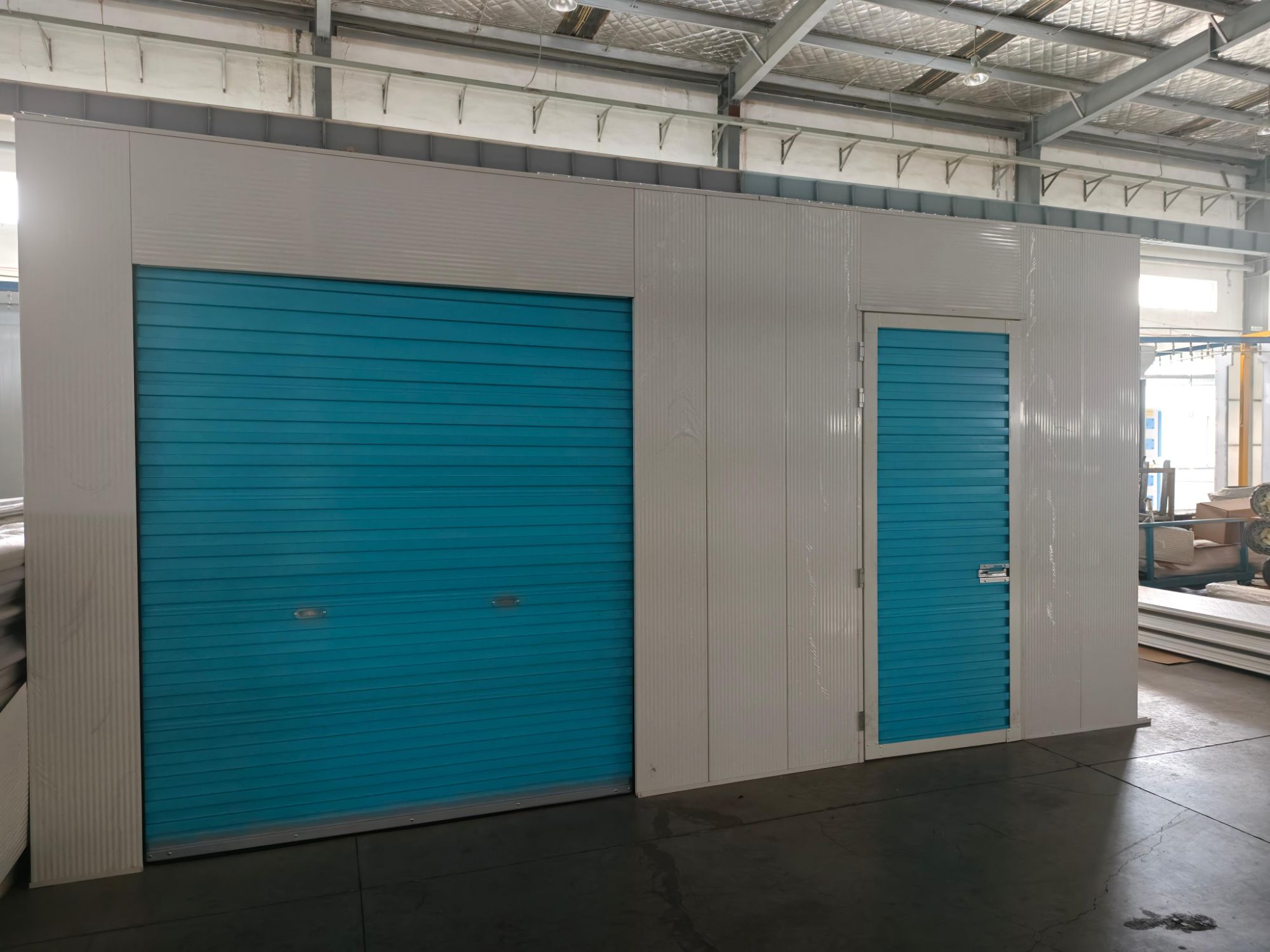
When you apply a protective coating, don’t hold back—treat every inch as if it’s the final touch that will never be refreshed. The goal is to build a barrier so robust that it laughs off time, weather, and neglect. Whether it’s a hidden bracket or a showpiece panel, lavish the same attention, because maintenance is a luxury you’re choosing to eliminate.
The secret lies in the prep: clean until there’s nothing left to compromise adhesion, then layer the coating thick enough to outlast your own expectations. Smooth, textured, or porous—each surface gets a custom rhythm of application that seals pores and bridges weak spots. This isn’t about just making it look good; it’s about making it impossible for rust, rot, or fading to find a foothold.
Imagine the satisfaction of walking away knowing that every hidden crevice and exposed edge is armored for the long haul. You’re not just painting or sealing—you’re setting a standard where future upkeep becomes irrelevant. That commitment to overkill now means the surface stays untouched, defiant against the years, as if maintenance was a myth you never subscribed to.
Design Joints That Criminals Can't Pry Apart in Silence
Most break-ins succeed because standard joint construction leaves just enough flex for a pry bar to gain purchase. To defeat this, we engineer connections that actively resist separation under load. Instead of relying on simple through-bolts, we use hidden interlocking geometries that tighten against each other when forced. The trick is creating a mechanical lock where outward pressure actually binds the parts more firmly together, making silent prying not just difficult but physically counterproductive.
A common weak point is the gap between door and frame. Here, we embed continuous steel inserts with a labyrinth profile—multiple channels that prevent a flat tool from finding a straight path to the latch. Each millimeter of movement creates sliding friction across a wider surface, killing leverage quietly. For surface-mounted hardware, we recess it into milled pockets so no lip exists to catch. The fasteners themselves sit in stepped bores, their heads guarded by hardened pins that spin freely if drilled, turning a would-be silent attack into a noisy, time-consuming mess.
Material pairing matters just as much as shape. We bond a dense, vibration-damping polymer layer between the metal joint components. When a crowbar bites in, this layer compresses and deadens sound while also distributing the load unevenly—making it nearly impossible to predict where the joint will yield. Combined with asymmetrical fastener spacing (no two are equidistant from an edge), the assembly refuses to torque open quietly. It’s not over-engineering; it’s a deliberate puzzle designed to frustrate anyone who attempts to disassemble it without the manufacturer’s key.
Pick Locks That Make Bold Cutters a Waste of Time
Most thieves rely on brute force, and a pair of bolt cutters is their go-to tool. If your lock can be snipped in seconds, it's practically an invitation. The real trick isn't just buying something heavy—it's understanding what makes a lock truly resistant to those long-handled jaws.
Look for shackles made from hardened boron steel, preferably with a squared or hexagonal profile that bolt cutters can't easily grip. Even better, choose locks with double-locking ball bearings and a shrouded shackle that leaves almost no exposed steel to attack. A thick, laminated body might slow them down, but a design that hides the weak points entirely will make them move on to an easier target.
Slope Roofs So Water Runs Off Before It Soaks In
The steep pitch of a roof does more than define a building's silhouette—it creates a fast lane for rainfall. As soon as droplets hit the surface, gravity takes over, ushering them down before they can pool or find a way through the smallest gaps. This simple, almost self-evident principle has guided builders for centuries, whether they were laying thatch in rainy England or overlapping clay tiles under the relentless downpours of tropical monsoons.
Water doesn't just slide off; it accelerates, sweeping away leaves, dust, and debris that might otherwise hold moisture against the roofing material. That momentum is what keeps the underlying structure dry and extends the life of everything from wooden rafters to modern waterproof membranes. Without that angle, even the most meticulously installed roof becomes a liability, inviting damp and decay with every storm.
Of course, the trick lies in matching the slope to the local weather and material. Too shallow an incline and water lingers, working its way under laps and joints. Too steep and you risk wind lifting edges or forcing driven rain uphill between slates. It's a balance that requires careful thought—one where the quiet efficiency of a well-pitched roof often goes unnoticed, precisely because it never gives water a chance to soak in.
Bake In Airflow to Keep Mildew From Making a Home
Mold spores are drifting around your home all the time, just looking for a cozy, damp spot to settle down and multiply. They thrive in stagnant air—the kind that hangs around after a shower or clings to the corners of a rarely opened closet. Baking in airflow means making those spots as unwelcoming as a drafty windowsill. Even a subtle, steady movement of air can whisk away excess moisture before it has a chance to soak into surfaces, interrupting the musty cycle before it starts.
You don’t need a lab-grade ventilation system—just a few habits that keep the air from going stale. Crack a window in the bathroom after bathing, and let the fan run an extra ten minutes. A small oscillating fan in the laundry room works wonders on damp clothes and linens, while leaving closet doors slightly ajar gives your clothes room to breathe. Think of it like an oven set to convection: the heat isn’t higher, but the moving air makes all the difference, cooking that dampness right out of your living space.
FAQ
Galvanized steel frames paired with heavy-gauge corrugated metal panels are a solid choice. They resist rust, handle impact well, and keep costs reasonable without sacrificing long-term strength.
Focus on the locking system. Use recessed hasp designs that protect padlocks from bolt cutters, and add welded-on lock shackles that make prying almost impossible. Simple, but very effective.
Proper roof pitch is huge. A sloped roof prevents water pooling and reduces the risk of leaks. Combine that with a baked-on polyester paint finish, and you'll fight corrosion for years.
Ventilation prevents condensation buildup, which can ruin sensitive items. Incorporate louvered vents near the roofline or use perforated panels discreetly near the floor. It keeps air moving without compromising security.
Adding interior anchor points for customer-supplied locks or straps gives an extra layer of theft deterrence. Also, motion-sensor LED lights inside or outside the unit can startle intruders while helping users see clearly.
A raised, reinforced concrete pad with a vapor barrier underneath is key. Make sure it extends slightly beyond the unit footprint to keep water from seeping under the walls or corroding the base track.
Roll-up steel doors with interior slide bolts are a great pick. They're harder to force open than swing doors and can be locked from the inside, making it tough for thieves even if they pick the exterior lock.
Tamper-proof screws on all external panels and hinges are a simple upgrade. Most thieves carry standard tools, so not being able to unscrew panels quickly can send them elsewhere. Also, consider integrated alarm contacts that trigger if a door is forced.
Conclusion
Building an OEM self-storage unit that truly lasts means treating every component as a critical barrier against time and intrusion. Start with the steel: pick a gauge that feels like overkill, because what's between a thief's pry bar and your customer's valuables shouldn't be thin enough to flex by hand. Then coat that metal—inside and out, seams included—with a finish that acts like a lifelong seal against rust, as if the unit will never again see a maintenance crew. Pay special attention to joints; overlap them deep, weld them continuous, and hide fasteners behind folded lips so no crowbar can find a silent purchase. Even the flooring should be considered a joint, anchored flush so nothing wedges underneath.
Security is also about outsmarting the tools of the trade. Locks should be shrouded recesses that eat bolt cutters for breakfast, with internal mechanisms that refuse to be picked or bumped. Don't forget the roof—a gentle slope, no matter how subtle, turns rain into an ally instead of an enemy, shedding water before it ever thinks about pooling. Meanwhile, louvered vents or concealed soffit openings work constantly behind the scenes, pushing moisture out and letting air circulate so mildew never gets a foothold. It's these quiet, integrated choices—the thickness under your knuckles, the slope you barely notice, the breathability you can't see—that turn a simple steel box into a vault that stands up to both weather and thieves year after year.
Contact Us
Contact Person: Cyril He
Email: [email protected]
Tel/WhatsApp: 8613969697307
Website: https://cqyqgd.en.alibaba.com/